


Whoever designed cockpit seating must have never flown long distances. It feels like sitting in economy class but worse. But there’s a way to stay comfortable at 35,000 feet: moving strategically.
Your body needs care just like the plane you fly. Studies show that pilots face muscle strain on long flights. But, doing simple stretches for 2-3 minutes every hour can improve blood flow by 30% and reduce mistakes caused by tiredness.
These stretches include neck turns, shoulder releases, and spine unwinding. They help you stay focused and avoid accidents. It’s not just about feeling good; it’s about staying safe.
Ever wanted to try that circulation routine on a flight? These tips turn the cramped cockpit into a place of control. Your body and passengers will appreciate it.
Yoga for Stress Relief
Imagine your stress levels as an altimeter climbing through turbulence – that’s aviation life on a Tuesday. While passengers sip cocktails, pilots navigate a symphony of blinking lights and air traffic control chatter. Yoga becomes your co-pilot in this high-stakes environment, helping more than just with physical stretching for aviation professionals.
The data shows pilots practicing yoga have 40% lower cortisol during emergency drills. This means they can stay calm and focused, unlike those who become a meme in aviation safety briefings. Deep breathing is not just spiritual fluff; it’s science that boosts your brain’s oxygen when you need it most.

Visualization techniques turn from California wellness trends into essential cockpit tools. They help pilots mentally prepare for emergencies, creating pathways in their brains. It’s like having an emergency checklist in your muscle memory.
The physical aspect of yoga is key. It’s not just about flexibility; it’s about upgrading your mental software. The FAA might not require yoga mats during medical exams, but they’re missing the best stress-management tool for the cockpit.
Even in cramped quarters, simple aviation stretching techniques can reset your nervous system. It’s cheaper than therapy and more effective than that third cup of coffee during long hauls.
The real magic happens when physical and mental practices merge. Your body unwinds tension while your mind gains clarity. This makes stretching for aviation professionals not just beneficial but essential for peak performance at 35,000 feet.
Quick Flows Pre- or Post-Flight
Your layover might be short, but it’s great for “gate-to-gate yoga.” You’re dealing with time zones that are mind-bending. Yet, these short yoga sessions are key, even more than your pre-flight checklist.
Studies show five minutes of movement can boost alertness and quick thinking. It’s like updating your body’s systems. Before flying, try a three-minute standing routine to wake up your muscles and improve balance.
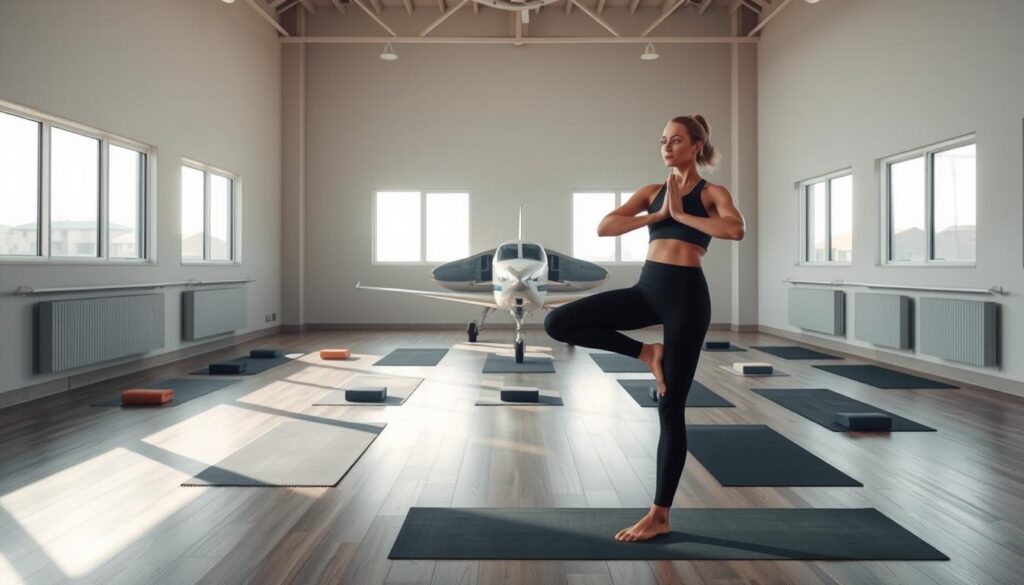
After flying, seated stretches are a game-changer. They help after being stuck in a cockpit for hours. They also help adjust your body clock better than any sleep aid.
Your hotel room can be a yoga studio. Use the desk for stretches and the wall for shoulder openers. You don’t need special gear; your body and gravity are enough. These pilot yoga tips focus on being useful, not perfect.
Airport terminals offer chances for yoga. Do ankle rotations at the gate or shoulder rolls while waiting. These small moves help keep you flexible during long flights.
The aim isn’t to look good on Instagram. It’s about staying ready for quick decisions in bad weather. Add these flows to pilot stretching exercises for full in-flight readiness.
The best pilot yoga tips are realistic. Even just five minutes can make a big difference at 35,000 feet.
Long-Term Fitness Benefits
Think your FAA medical certificate is the only health metric that matters? Think again. The real test happens when you try to tie your shoes at 60 without groaning. Stretching for aviation isn’t about touching your toes—it’s about touching retirement with your dignity intact.
Data shows pilots with consistent flexibility routines outlast aircraft models and marriage statistics. That downward dog does more than relieve back pain—it maintains vascular health, reducing deep vein thrombosis risks that haunt long-haul crews. Strong core muscles from yoga mean you’ll avoid the “pilot’s hunch” that makes you look permanently confused.
The cognitive benefits are staggering. Studies reveal pilots over 50 who practice regular stretching for aviation have reaction times matching pilots 15 years younger. It’s the closest thing to a time machine without needing a DeLorean. Your career isn’t measured in flight hours alone—it’s measured in quality landing years.
Want to be the 70-year-old instructor who can do steep turns? Sustainable fitness practices transform your body from a cockpit liability into your greatest co-pilot. The choice is simple: retire with a pension or retire with a pill organizer the size of your flight kit.




