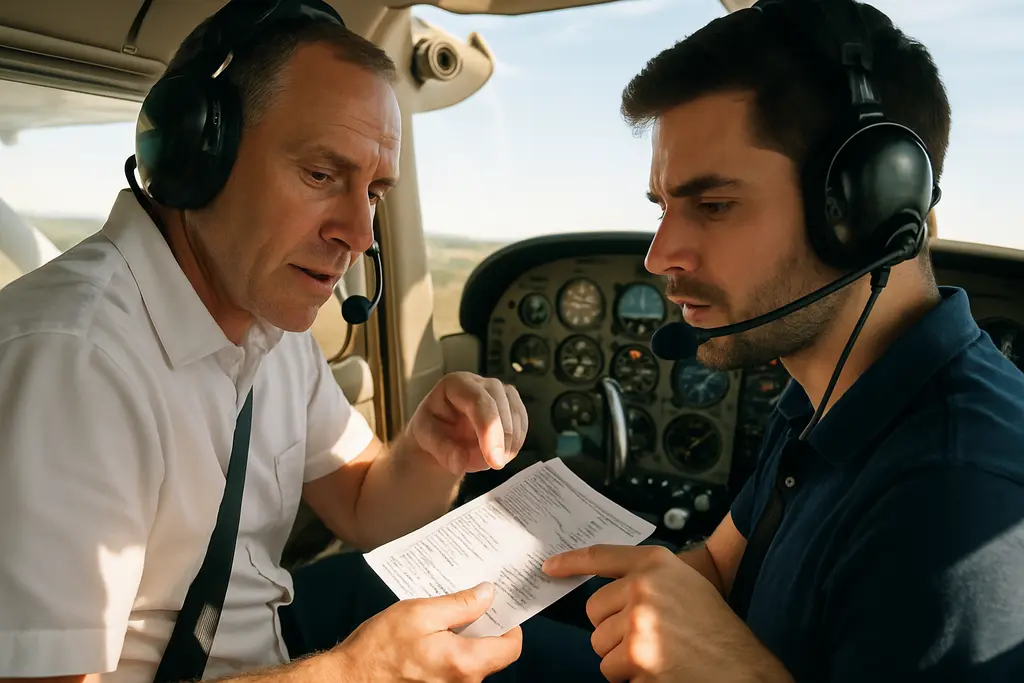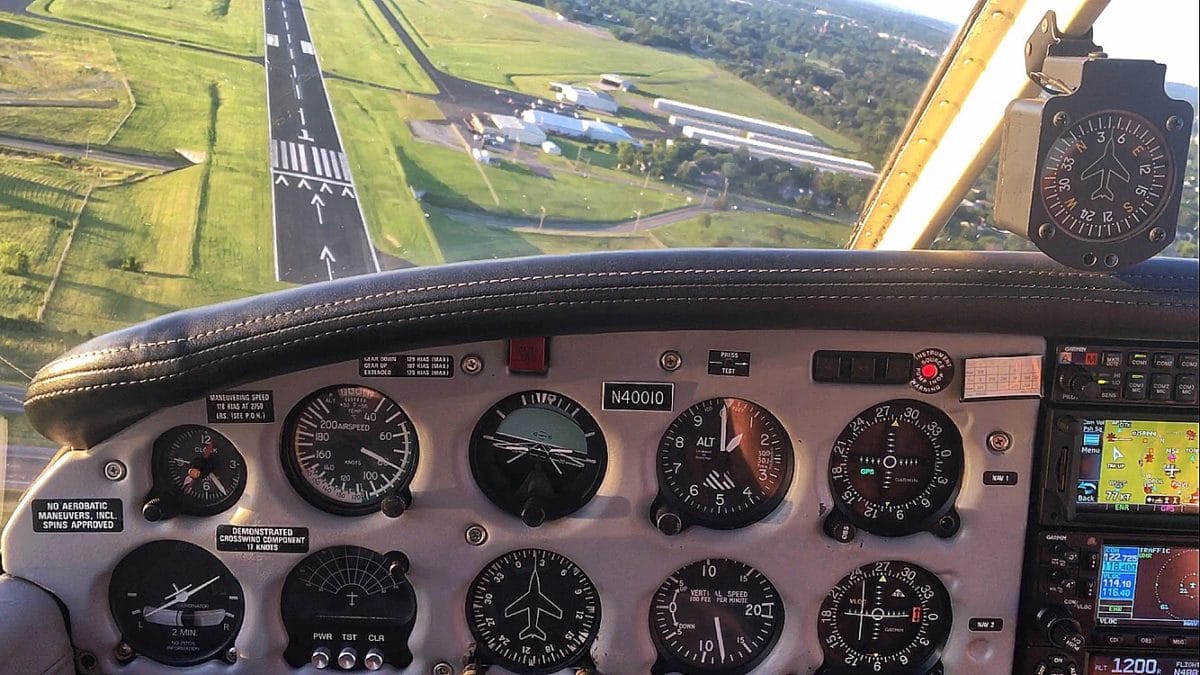
Power-off landing practice is one of the most useful parts of private pilot training because it teaches a student how to manage the airplane when power is reduced or unavailable and a safe landing still has to happen. In FAA guidance, power-off accuracy approaches and landings are built around gliding to a touchdown point without using engine power to stretch the approach. The larger purpose is not just to complete a maneuver. It is to develop judgment, glide control, and the ability to plan an approach that works even when the engine is no longer part of the solution.
For student pilots, that makes this kind of practice far more valuable than it may appear at first. A normal powered approach can hide weak energy management because throttle changes are always available. A power-off approach removes that safety net and forces the pilot to understand wind, altitude, spacing, flap timing, and aiming point discipline. The FAA’s Airplane Flying Handbook makes clear that the ability to estimate glide distance is the real basis of power-off accuracy approaches and landings.
That is why power-off landing practice matters well beyond the checkride. It helps private pilots build the habits needed for abnormal situations, but it also improves normal pattern work. Pilots who learn to manage a no-power glide usually become better at planning every other kind of landing as well.
What Power-Off Landing Practice Actually Means
At its core, power-off landing practice means flying an approach and landing primarily as a glide rather than as a powered descent. In FAA language, power-off accuracy approaches are made with the engine at idle through a specific pattern to a touchdown area on the runway. The objective is to build the judgment and procedures needed to land safely and accurately without relying on thrust to adjust the airplane’s path at the last moment.
This is important because many students first think of power-off work as an emergency-only lesson. In reality, it is also a precision lesson. The pilot must judge whether the airplane is high, low, fast, or slow, then use spacing, drag, configuration, and sometimes slips to arrive at the runway with the right energy picture. That turns the maneuver into a practical lesson in planning rather than a simple demonstration.
In private pilot training, instructors often use this practice to connect several skills at once. It reinforces traffic pattern discipline, glide management, runway aiming point control, and decision-making under pressure. Those are all core private pilot skills, which is why power-off landing work tends to leave a lasting impression on students.
Why Private Pilots Practice Power-Off Approaches
The main reason private pilots practice power-off landings is safety. FAA emergency procedures guidance explains that pilots need to be able to make appropriate decisions and control the airplane during abnormal or forced landing scenarios. While not every practice power-off approach is a full emergency simulation, the training is directly related to the same underlying skill: getting the airplane to a safe touchdown when power is not available or cannot be counted on.
There is also a strong proficiency benefit. A pilot who can judge glide range correctly usually has a better understanding of energy management during normal approaches too. That means more stable patterns, fewer rushed corrections on final, and a better sense of when an approach is working versus when it is starting to unravel.
For student pilots, this kind of practice can also reduce overreliance on the throttle. That matters because landing skill improves when the pilot learns to control the airplane with planning and attitude rather than constant power adjustments. In a training environment, that creates a stronger foundation for both checkride standards and safer real-world flying.
How The FAA Frames The Maneuver
The FAA’s Airplane Flying Handbook describes power-off accuracy approaches and landings as exercises in gliding to a selected touchdown point. The handbook emphasizes that estimating how far the airplane will glide is central to the maneuver, and it discusses the need to plan a pattern that allows the pilot to arrive neither too high nor too low.
That FAA framing matters because it shows what instructors are really trying to teach. The maneuver is not about showing off a dramatic engine-out pattern. It is about judgment, spacing, and controlled energy use. A student who understands that will usually perform better than one who treats the exercise as a memorized sequence.
The FAA’s private pilot standards also support the broader relevance of this training by emphasizing approach and landing proficiency, risk management, and aircraft control. Even when the exact maneuver title varies by lesson or instructor, the training goal is the same: the pilot must be able to fly a safe, deliberate approach without falling behind the airplane.
What Skills Power-Off Landing Practice Builds
Power-off landing practice is valuable because it develops several important pilot skills at once.
| Skill Area | What The Pilot Learns | Why It Matters |
|---|---|---|
| Glide Judgment | How far the airplane can travel without power | Prevents undershooting or overshooting |
| Pattern Planning | Where to position the airplane in the pattern | Improves spacing and setup |
| Energy Management | When to add drag, configure, or slip | Helps maintain a controllable approach |
| Runway Accuracy | How to arrive at the intended touchdown area | Improves landing precision |
| Decision-Making | When an approach is salvageable and when it is not | Supports safer outcomes |
These are not separate training goals that happen by accident. They are tightly connected. A pilot who improves glide judgment often improves runway alignment and aiming point control too, because all of those skills depend on better anticipation instead of late correction.
That is one reason power-off landing practice fits so naturally with strong pattern training. If a student already understands spacing and sight picture in the pattern, the transition into power-off work usually becomes much smoother. Our guide to traffic pattern basics connects well here because many power-off landing errors actually begin with poor pattern setup rather than poor flare technique.
The Role Of Pattern Position And Glide Judgment
One of the biggest lessons in power-off landing practice is learning where the airplane needs to be in the pattern when the throttle comes back to idle. If the airplane is too close, too far, too high, or too low, the rest of the approach becomes harder to manage. The FAA explains that glide estimation is the real basis of the maneuver, which means pattern position is not a small detail. It is the foundation of the whole approach.
This is where many students initially struggle. They may understand the runway, the aiming point, and even the checklist flow, but still misjudge how wind and altitude affect the descent path. A tailwind on downwind can carry the airplane too far. A base turn made too late can create pressure to steepen the approach. A high approach may lead to excessive drag changes made too late in the pattern.
As a result, instructors often emphasize that power-off landing practice starts well before final. Good performance usually comes from a smart downwind, a timely abeam point, and disciplined turns rather than a desperate attempt to fix everything near the runway.
Common Student Mistakes During Power-Off Landing Practice
A common mistake is turning toward the runway without first confirming that the glide picture makes sense. Students sometimes rush because the maneuver feels more urgent than a normal approach, which can lead to poor spacing and unstable turns. The FAA instructor material notes that learners can make predictable landing errors during power-off accuracy training, especially when they are reacting late instead of planning early.
Another frequent problem is poor drag management. Some students delay flap use too long and end up high and fast. Others add too much drag too early and then realize they no longer have enough glide range. Because engine power is unavailable as a recovery tool in the exercise, these decisions matter more than they do in a normal landing pattern.
A third mistake is fixation on the touchdown point without enough attention to airspeed and coordination. Accuracy matters, but not at the expense of basic control. The FAA’s standards consistently place safe aircraft control ahead of cosmetic precision, which is an important mindset for any student learning the maneuver.
How Power-Off Landing Practice Improves Normal Landings
One of the best reasons to take this training seriously is that it often improves ordinary landings. A pilot who can fly a clean glide approach tends to become more aware of sight picture, aiming point, and spacing during a powered pattern as well. In other words, the skill transfers. Better power-off work often leads to better normal landing discipline.
This is especially true with approach stability. Students who practice without depending on throttle changes usually become more intentional about configuring earlier and judging the runway picture sooner. That often reduces the last-minute corrections that make many training landings feel rushed.
The result is not just a better maneuver grade. It is a more thoughtful approach mindset overall, which is exactly what private pilot training is supposed to develop.
Is Power-Off Landing Practice The Same As An Emergency Landing
Not exactly. The skills overlap, but the terms are not always interchangeable. FAA emergency procedures guidance covers forced landings and precautionary landings as broader emergency topics, while power-off landing practice in training is often a structured exercise used to build glide judgment and landing accuracy under simulated no-power conditions.
That distinction matters because not every training glide approach should be treated like a full emergency scenario. In practice, an instructor may use a controlled airport environment, known runway, and predictable pattern spacing to isolate the glide-management part of the lesson. A real engine failure may involve far more variables, including terrain, wind uncertainty, checklist priorities, and off-airport landing decisions.
Still, the training value is obvious. Even though the lesson is structured, it builds habits that support better emergency response later. A pilot who already understands glide range and pattern planning has a stronger base when a real abnormal situation develops.
Why Instructors Emphasize Decision-Making During The Maneuver
Power-off landing practice is not only about whether the airplane reaches a point on the runway. It is also about whether the pilot makes smart choices throughout the approach. FAA training philosophy consistently emphasizes risk management and situational awareness, and this maneuver is a good example of why. A good power-off approach is built on early recognition and timely correction, not on stubbornly forcing an approach that is no longer stable.
That is why instructors often focus on questions like these: Is the airplane genuinely going to make the field? Is drag being used intelligently? Is the pattern too tight or too wide? Is the pilot maintaining target airspeed? Those are judgment questions, and they are part of what makes the maneuver valuable.
For private pilots, that mindset matters just as much as the touchdown itself. Landing accuracy is useful, but the bigger goal is learning how to think ahead of the airplane when options are limited.
Getting More Value From Power-Off Landing Practice
Students usually get the most from this lesson when they stop treating it like a dramatic event and start treating it like a problem in timing and energy management. The best improvements often come from reviewing where the pattern started, how wind affected spacing, and whether drag changes were made at the right time. Those details reveal far more than simply asking whether the landing was short or long.
It also helps to study the FAA’s Airplane Flying Handbook alongside actual flight lessons, because the handbook gives the maneuver context instead of reducing it to a checklist. That kind of preparation can make the in-air lesson more coherent and help students understand why their instructor is emphasizing certain corrections.
Final Thoughts
Understanding power-off landing practice is really about understanding how private pilots learn to manage an airplane when power is not available as a planning tool. The lesson develops glide judgment, spacing awareness, runway accuracy, and decision-making under pressure, which is why it remains such an important part of flight training.
For student and newly certificated private pilots, the real value goes beyond one maneuver. Power-off landing practice teaches the kind of anticipation and energy control that improves every approach afterward. When taught well, it is not just an emergency exercise. It is one of the clearest lessons in how to fly the airplane with purpose.