By Tim Halberg | Pilot Pointer
When your office sits at 35,000 feet and you spend half your life navigating busy international hubs, your definition of a “spring break” is vastly different from the average traveler’s. Pilots do not want to stand in two-hour security lines, they do not want to fight for a spot on a crowded beach, and they certainly do not want to be anywhere near the chaotic airspace of Orlando or Cancun in March.
Because we have the unique perk of non-revenue standby travel, we have to actively plan to maximize our time off by targeting destinations where the flight loads are favorable and the crowds are nonexistent.
Here at Pilot Pointer, we’ve polled our network of commercial aviators to find out exactly where the flight deck goes to decompress. From quick coastal hops to long-haul luxury, here are three pilot-approved spring break destinations across three different budgets.
1. The Moderate Budget: Loreto, Baja California Sur, Mexico

While the college crowds swarm Cabo San Lucas, pilots in the know head a few hundred miles north to the quiet, historic fishing town of Loreto. Lying on the Gulf of California, the water is glass-calm, the seafood is unparalleled, and the vibe is completely horizontal. This is where the flight attendants go.
For West Coast-based pilots, getting here is a breeze. If your mainline carrier’s flights look full, it is incredibly easy to jumpseat or utilize regional charter flights out of LAX or Phoenix. It is the ultimate destination for trading busy airspace for quiet Baja California escapes.
- The Vibe: Sleepy, authentic Mexican coastal living with world-class sport fishing and kayaking.
- The Lodging: Instead of mega-resorts, pilots tend to favor boutique hotels or booking beachfront private vacation rentals where they can cook their own locally caught dorado.
- Estimated Cost (Moderate): $900 – $1,500 for a 5-day trip for two. Since your flights are covered, your budget goes entirely toward cheap, incredible street tacos, boat rentals, and a comfortable, mid-tier Airbnb.
2. The Upscale Budget: Mendoza, Argentina

Spring break in the Northern Hemisphere means it is late summer/early autumn in the Southern Hemisphere—which happens to be the grape harvest season (Vendimia) in Argentina’s wine country.
Mendoza sits at the foothills of the Andes, offering breathtaking views that rival anything you see from the flight deck. Because Buenos Aires is a major international hub, it is a reliable standby route for widebody aircraft, making it highly accessible for airline crews looking for a sophisticated, adult-only getaway.
- The Vibe: Elegant, culinary-focused, and incredibly scenic. It is all about resetting your circadian rhythm with a slow pace of life.
- The Lodging & Activities: Expect to stay in luxury vineyard lodges (fincas) where you can spend your afternoons horseback riding through the vines and indulging in curated wine tastings featuring the world’s best Malbecs.
- Estimated Cost (Upscale): $3,000 – $4,500 for a 7-day trip for two. Argentina offers an incredible exchange rate for the US dollar right now, meaning you can experience five-star dining and luxury vineyard accommodations at a fraction of what it would cost in Napa Valley or Bordeaux.
3. The Luxury Budget: The Maldives
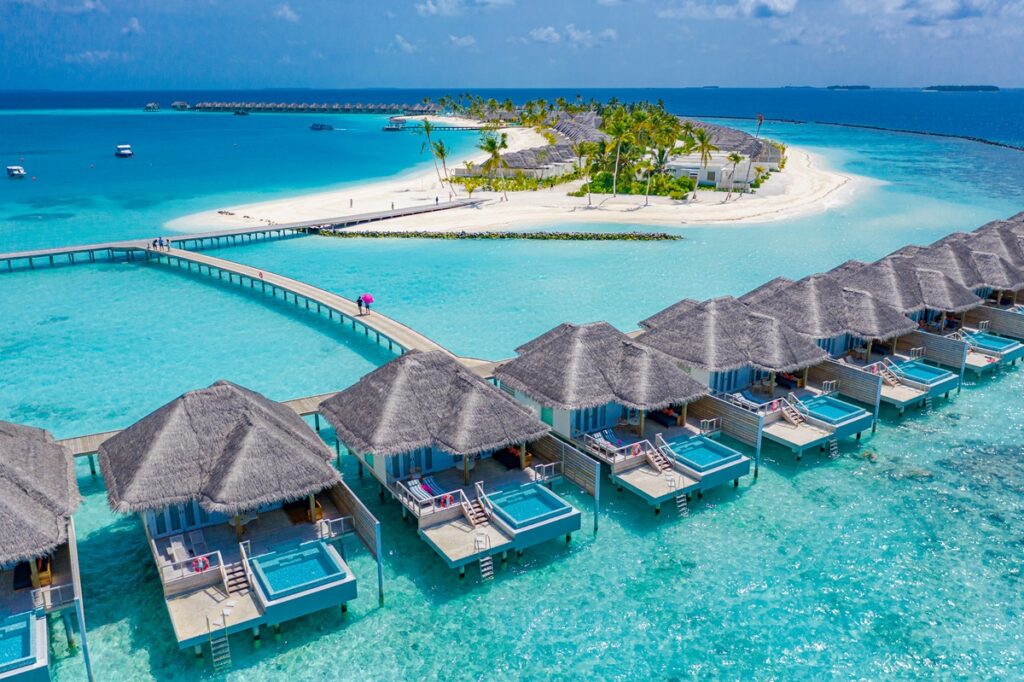
When a senior captain wants to truly disappear and money is no object, they head to the Indian Ocean. The Maldives is the ultimate “end of the line” destination. It requires stringing together a few long-haul flights through the Middle East or Europe, but the reward is absolute, uninterrupted isolation.
This destination is consistently ranked as a bucket-list trip among fellow flight crews because it offers an environment completely alien to the inside of an airplane: open air, zero noise pollution, and warm, crystal-clear water directly beneath your bed.
- The Vibe: Complete grid-off luxury. You will take a seaplane from the main island of Malé to your private atoll, where your only daily decision is whether to snorkel or order room service.
- The Lodging: The iconic overwater bungalows. Resorts like the Anantara Kihavah or Soneva Fushi offer private plunge pools, glass-bottom bathtubs, and personal butlers.
Estimated Cost (Luxury): $8,000 – $15,000+ for a 7-day trip for two. Even with free standby flights to get to Malé, the mandatory seaplane transfers, luxury overwater accommodations, and isolated resort dining come with a massive price tag. It is an expensive investment in absolute paradise.