


The flight deck at 35,000 feet is incredibly isolated. Yet, the most effective mental health tool isn’t a corporate wellness program. It’s the person sitting next to you.
This isn’t just about feeling good. The Centre for Aviation Psychology looked at over 110 airlines in 11 countries. They covered 32,000 pilots. Their study shows pilots share a common language, both in words and understanding.
Think of “Sully” – a perfect example of crew resource management. Now, imagine using this approach for mental health. Why do pilots trust their peers over therapists? It’s because a colleague explaining how to handle threats over coffee is more valuable than any consultant.
PAN’s goal is to build a community, and P2W sees wellbeing as a key skill. These aren’t just buzzwords. They’re the future of keeping pilots safe, one conversation at a time.
Types of Programs
Think all pilot wellness programs are just coffee chats? Think again. The aviation mental health scene has grown from simple support to complex systems. These systems are as advanced as the most complex flight computers.
There are three main models, each with its own way of helping pilots. It’s not a one-size-fits-all approach. Instead, it’s more like choosing your own path to mental strength.
The Pilot Assistance Network’s 24/7 hotline is not your average customer service. It’s like an emergency team for pilots, available everywhere, anytime. They offer support for pilots and their families, because when pilots struggle, their families do too.
The Crew Assistance Program’s Resilience Hub is like a preventive care clinic. It uses the ICAO’s Threat and Error Management model to help pilots. It’s like a workout for your mind, helping pilots stay strong before problems arise.
The P2W approach sees wellbeing as a key skill. It combines mindfulness and Functional Medicine to help pilots perform at their best. This approach recognizes that mental and physical health are both important for success.
But there’s a legal side to this too. CAT.GEN.MPA.215 requirements say airlines must have support programs. These programs must promise confidentiality and not punish pilots for seeking help.
So, how do these programs compare? Let’s look at them like comparing aircraft specs:
| Program Feature | PAN Model | CAP Resilience Hub | P2W Approach |
|---|---|---|---|
| Response Time | Immediate (24/7 hotline) | Scheduled sessions | Ongoing coaching |
| Confidentiality Level | Absolute anonymity | Protected reporting | Clinical privacy |
| Methodology | Crisis intervention | TEM-based prevention | Holistic wellness |
| Regulatory Compliance | Fully CAT.GEN.MPA.215 compliant | Exceeds requirements | Industry leading standards |
The question isn’t which program is best. It’s which one meets a pilot’s needs at the right time. Sometimes, you need emergency help, sometimes preventive care, and sometimes a complete lifestyle makeover.
What makes these pilot wellness programs work is their understanding of aviation culture. They know that when pilots say “I’m fine,” they often mean they’re exhausted and out of sync.
The growth of these support systems is a big step forward in aviation safety. It’s like the biggest safety improvement in years. It shows that taking care of pilots’ minds is just as important as their technical skills.
How to Join or Start a Group
So you’ve decided peer support might actually be useful – now what? Joining an existing aviation peer support program isn’t like signing up for another recurrent training module. It’s more like finding the right therapist who understands why you get twitchy when someone says “stable approach.”
First, find programs that speak your language. Literally. The Critical Assistance Program offers support in 8 languages because apparently aviation English doesn’t cover everything when you’re having a panic attack at 3 AM in a foreign hotel room.
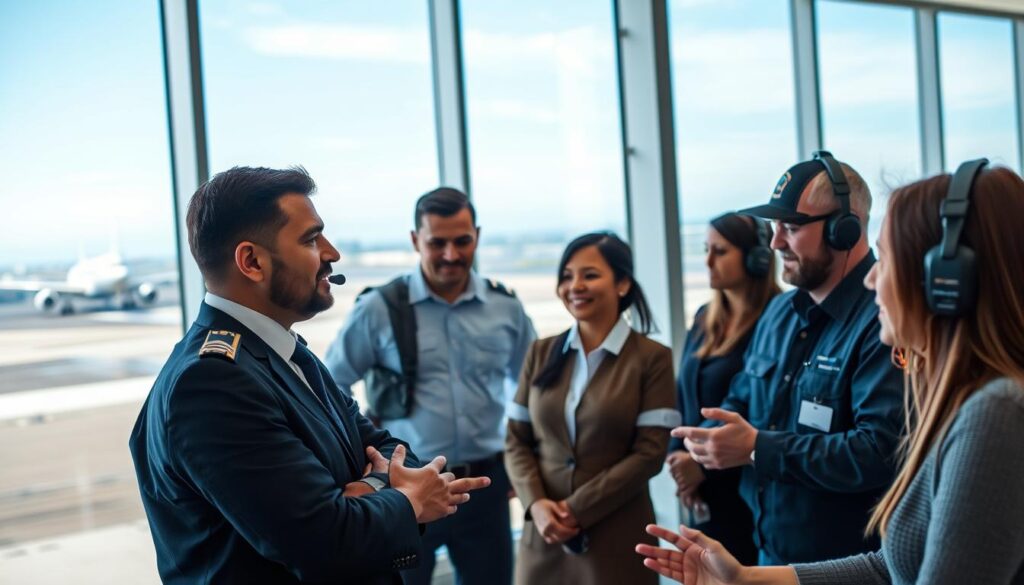
Confidentiality agreements make HIPAA look like casual suggestions. These programs understand that pilots would prefer to discuss their tax returns than admit they’re struggling. The privacy walls are thicker than a 747’s fuselage.
Thinking about starting your own group? Captain Duarte Lopes from Peer to Wing didn’t reinvent the wheel – he borrowed from first responders and stockbrokers (yes, really). Because apparently high-stress professionals share more in common than we’d like to admit.
Getting management buy-in requires framing it as risk mitigation. Present it as operational excellence, not group therapy. Because nothing gets airline executives excited like reduced insurance premiums.
| Program | Special Features | Entry Requirements |
|---|---|---|
| Critical Assistance Program | 8 language support, 24/7 hotline | Active aviation professional |
| PAN Network | Qantas-specific community building | Qantas group employees only |
| Peer to Wing | Retreat programs, membership tiers | Completion of peer support training |
Building something that doesn’t collapse when founding members get transferred? That’s the real test. The best peer support aviation programs have succession plans tighter than a well-executed go-around procedure.
Remember: This isn’t about creating another committee. It’s about building something that actually works when things go wrong. Because in aviation, we plan for everything – except sometimes ourselves.
Real Pilot Testimonials
Forget corporate brochures – the real proof of pilot wellness programs lives in the cockpit conversations they’ve transformed.
Captain Reyné O’Shaughnessy didn’t just stumble into creating Peer 2 Wellness after 34 years flying commercial. She saw how physical and mental health got tangled like headset cords after a long flight. “We treat our aircraft better than we treat ourselves,” she notes wryly. “The checklist for human maintenance? Often missing from the pre-flight.”

Then there’s Captain Duarte Lopes, who found that mindfulness beats complaining about scheduling during layovers. His peer support group became the unexpected co-pilot he needed. “Sometimes the most valuable cockpit resource isn’t the emergency checklist,” he reflects. “It’s the person who can say ‘I’ve been there too’ when things get rough.”
The evidence stacks up faster than turbulence over the Rockies. PAN’s family support data shows that when pilots talk openly, incidents get prevented. It turns out that hiding mental health struggles creates more risk than addressing them.
Anonymous testimonial from a 777 captain: “I was two months from early retirement when the panic attacks started. Thought I’d lose my medical, my pension, everything. The peer program didn’t just save my career – it reminded me why I loved flying in the first place.”
Another first officer shares: “We’re trained to handle engine failures, but nobody trains you for the silence that follows a tough day. The wellness program gave me vocabulary for what I was feeling – and people who actually understood.”
These aren’t corporate success stories. They’re real people remembering that the most complex system they operate isn’t the aircraft – it’s themselves. And sometimes, the best navigation tool is another pilot who’s flown through the same storm.
Global Best Practices
Regulatory changes are happening quickly, like how pilots handle crosswind landings. Europe’s CAT.GEN.MPA.215 now makes aviation peer support a must. The FAA’s ARC report is changing rules in the U.S. Now, everyone knows that pilot mental health is key to safety.
Cultural differences are big. Scandinavian openness clashes with Asian respect for hierarchy. What’s private in Germany might be public in the Middle East. Good peer support programs adjust like pilots do for weather.
CAP’s work in eleven countries shows what works. Good pilot wellness programs are trusted. Bad ones just meet rules. The key is knowing the culture and the job.
ICAO’s TEM model gives a framework. But, each place needs its own touch. The best programs mix rules with real support. They help pilots in tough times.
Global best practices aren’t just about rules. They’re about creating support that works everywhere. When the seatbelt sign goes on, every pilot needs help.




