Confirmed: aging ATC infrastructure has moved from a facilities issue into a daily operational concern for pilots, instructors, dispatchers, and controllers. The concern is not that the national airspace system is unsafe by default; it is that older communications, radar, automation, and facility systems can narrow the margin for error when traffic volume, weather, staffing, or training loads already place pressure on the system. For pilots, the practical response is not panic. It is better preparation: stronger radio habits, clearer lost-communications practice, better contingency briefing, and more realistic simulator scenarios.
How Aging ATC Infrastructure Changes Training
Aging ATC Infrastructure In Brief
Confirmed: a 2023 FAA assessment reviewed 138 air traffic control systems and found 51 systems, or 37 percent, were “unsustainable,” while 54 systems, or 39 percent, were “potentially unsustainable.” The same assessment identified 17 systems as “especially concerning,” with most lacking modernization plans scheduled for completion within the next six to ten years, according to the GAO review of FAA systems. Many of these systems are more than 30 years old. That matters for training because pilots are taught to expect reliable surveillance, voice communication, and automation support, yet crews must still be ready for partial failures that may occur without warning.
Reviewed: aging ATC infrastructure should be treated in training as a systems-resilience topic, not only a government funding topic. A student pilot can understand the basics early: ATC services are built on communications paths, radar feeds, automation tools, backup procedures, and human coordination. If one link degrades, the system may still function, but controllers and pilots may need to slow the operation, increase spacing, clarify instructions, or reroute traffic. Those responses belong in scenario-based training from private pilot through airline transition programs.
Why Training Feels The Impact
Confirmed: the FAA’s 2026–2028 controller workforce plan, as summarized in the supplied research, reported that training capacity remained the primary constraint on workforce growth. The same research noted that the agency was expanding simulation-based controller training and training infrastructure. For pilots, that point has a direct training parallel. Aviation training capacity is never just about aircraft, instructors, and simulators. It also depends on predictable ATC services, airspace access, instrument approaches, tower operating capacity, and communication reliability.
Market-analysis: flight schools and airline training departments should expect infrastructure reliability to affect lesson completion, instrument training efficiency, and dispatch planning on some days. That does not mean students should avoid busy airspace. It means instructors should teach students how to use alternates, request clarification, manage workload, and stay ahead of fuel planning when delays develop. Related Pilot Pointer coverage on ATC vulnerabilities and pilot safety aligns with this practical focus: pilots cannot repair the system from the cockpit, but they can reduce risk through disciplined communication and verification.
What Recent Disruptions Showed
Newark And Dallas Examples
Confirmed: in 2025, FAA reported disruptions involving Newark Liberty International Airport after antiquated telecommunications lines at Philadelphia TRACON failed. The failures caused about 90-second radar and radio blackouts in April and May 2025, which led to delays and cancellations. Confirmed: in September 2025, Dallas TRACON experienced an outage tied to telecommunications issues that resulted in loss of radar, frequencies, and automation equipment, followed by ground stops and more than 1,800 delays and cancellations, as described in the GAO modernization report.
Reviewed: these disruptions are useful training case studies because they show how a technical failure can become an airspace-management problem within minutes. A 90-second communications or radar interruption may sound short to a passenger, but it can be long enough to interrupt clearances, handoffs, traffic calls, approach sequencing, missed approach coordination, or taxi instructions. The pilot response must be steady and procedural: maintain aircraft control, comply with the last clearance unless safety requires another action, monitor the assigned frequency, use published lost-communications guidance when applicable, and avoid filling the frequency with nonessential calls after service returns.
System Age Versus Operational Risk
Opinion, based on the confirmed findings above: the age of a system is not the only risk factor. A newer system can fail, and an older system can remain dependable if it is well supported. The larger issue is whether a system has sustainment risk, staffing support, spare parts, replacement planning, and backup paths. That is why the FAA assessment categories matter. “Unsustainable” and “potentially unsustainable” are not abstract labels for pilots; they suggest a greater need for operational buffers in the event of a service interruption.
Confirmed through the supplied research: the FAA’s fiscal year 2026 budget request included $4.0 billion for Facilities and Equipment to sustain vital infrastructure, including replacement of aging radars and telecommunications systems, and targeted training for at least 1,900 controllers in fiscal year 2026. That funding context is relevant, but pilots should avoid assuming quick relief at the operational level. Modernization programs can take years, and crews still need practical habits for the flight scheduled today.
Procedure Discipline For Crews And Controllers
Radio Failure Habits
Reviewed: the most useful cockpit response to infrastructure disruption begins before engine start. A crew briefing should identify the expected departure frequency sequence, nearby alternates, terrain or obstacle concerns, weather constraints, and the plan if a clearance, handoff, or readback becomes uncertain. In piston training aircraft, that may mean reviewing the lost-communications section of the regulations and the airport diagram. In turbine operations, it may mean verifying FMS routing, company procedures, dispatch contact options, and fuel margins.
- Use complete readbacks for headings, altitudes, speeds, runway assignments, hold-short instructions, and approach clearances.
- Ask for clarification early rather than carrying uncertainty into a busier phase of flight.
- Brief lost-communications procedures before operating in busy terminal airspace or low weather.
- Track fuel and alternates with extra care when ground stops or extended vectors are possible.
- Practice cockpit task sharing so one pilot flies while the other manages radios and checklists.
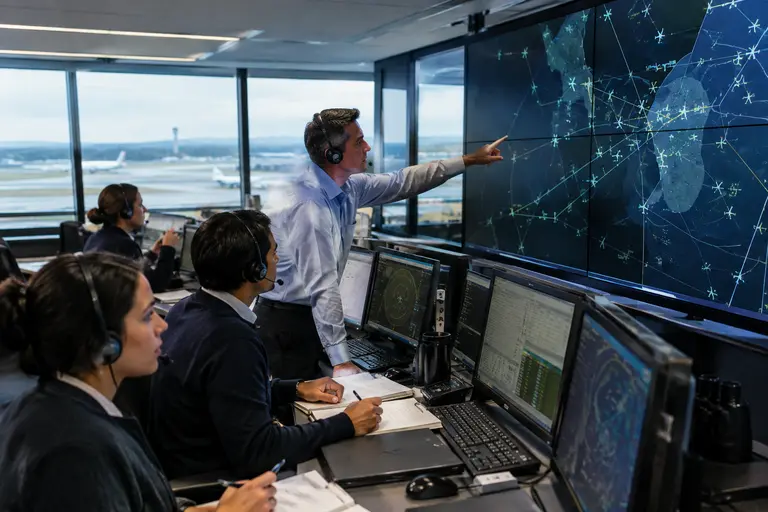
Reviewed: controllers also rely on procedure discipline during outages. They may increase spacing, reduce arrival rates, use alternate frequencies, issue holding instructions, or coordinate traffic through backup channels. Pilots should expect a more conservative flow of traffic after a disruption. Pressing for shortcuts or repeated updates rarely helps. A calm, concise transmission often supports the controller’s recovery plan better than extra explanation.
Simulator Scenarios
Market-analysis: simulator sessions should include partial ATC service failures, not only aircraft system failures. A practical scenario might begin with an ordinary IFR arrival, then introduce a missed handoff, a blocked frequency, delayed radar identification, or a temporary inability to receive vectors. The instructor can then assess whether the pilot maintains the clearance, manages workload, monitors terrain, and communicates with professional brevity. Aging ATC infrastructure gives training providers a reason to make those scenarios more common and more realistic.
For flight schools, this is also a scheduling issue. If outages or ATC delays reduce access to a preferred practice area or instrument approach, instructors need backup lesson plans that still produce value. Ground instruction can cover charted holds, alternate planning, airport surface hotspots, and abnormal communication flows. Pilots who want broader media literacy outside the cockpit can also explore related content through internetvideomag.com, but flight training decisions should remain grounded in official aviation procedures and instructor guidance.
Aging ATC Infrastructure Training Priorities
What Pilots Should Carry Forward
Reviewed: aging ATC infrastructure does not change the pilot’s first responsibility: aviate, then communicate, then manage the flight path and clearance. It does change how seriously training organizations should treat backup planning. The best response is neither alarm nor complacency. It is a training culture that assumes services are highly capable, yet never treats any single frequency, radar feed, automation tool, or facility as the only path to a safe outcome.
Confirmed: recent disruptions in 2025 showed that telecommunications failures could create radar, radio, and automation losses with broad traffic effects. Confirmed through the supplied research: a late September 2026 outage at a Philadelphia FAA facility also disrupted major New York-area airports. Those events, viewed together, support a clear training priority for October 24, 2026: pilots should practice degraded-service procedures before they need them in live airspace.
Tim Halberg’s practical takeaway for modern pilots is straightforward: build resilience into every phase of training. That means sharper readbacks, stronger briefings, scenario-based simulator work, patient cockpit communication, and conservative fuel planning when the system slows down. Aging ATC infrastructure is a national modernization challenge, but the cockpit-level answer starts with disciplined habits that pilots can apply on the very next flight.