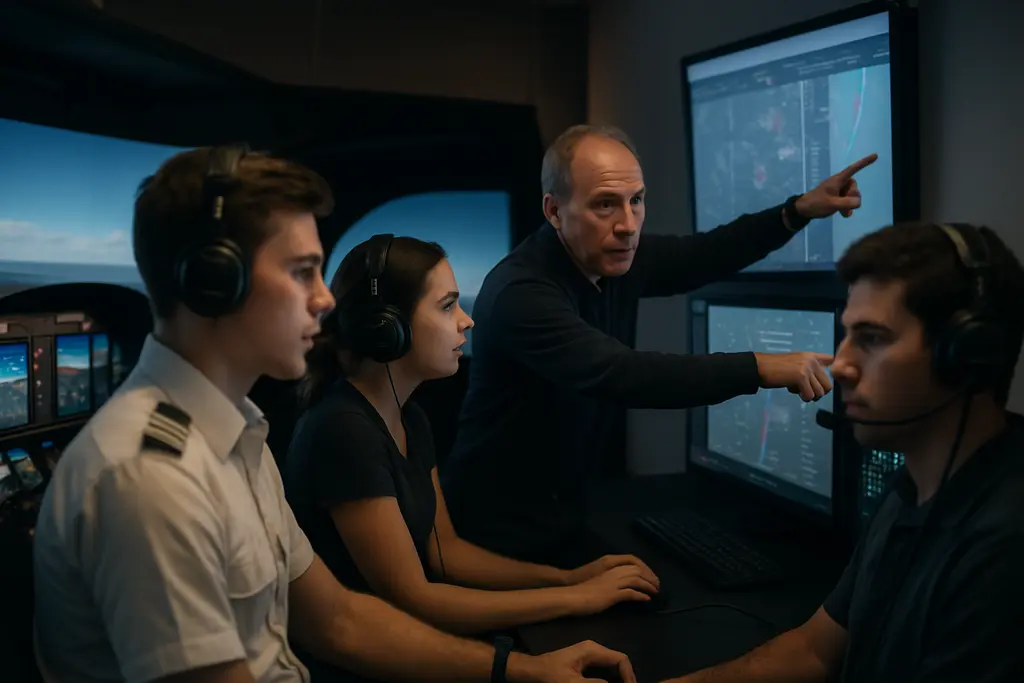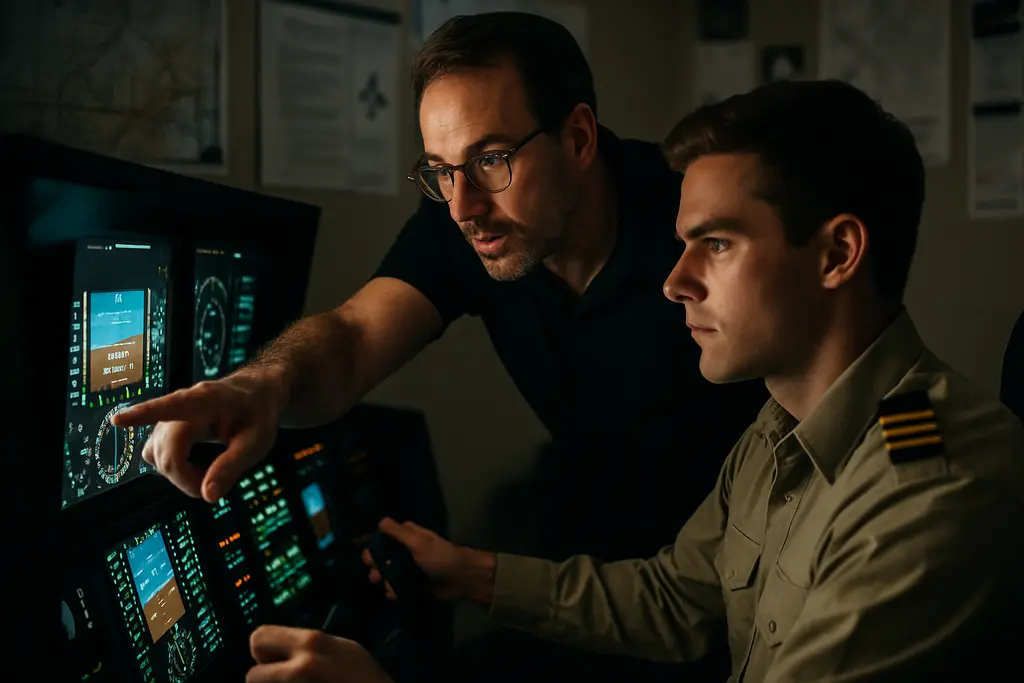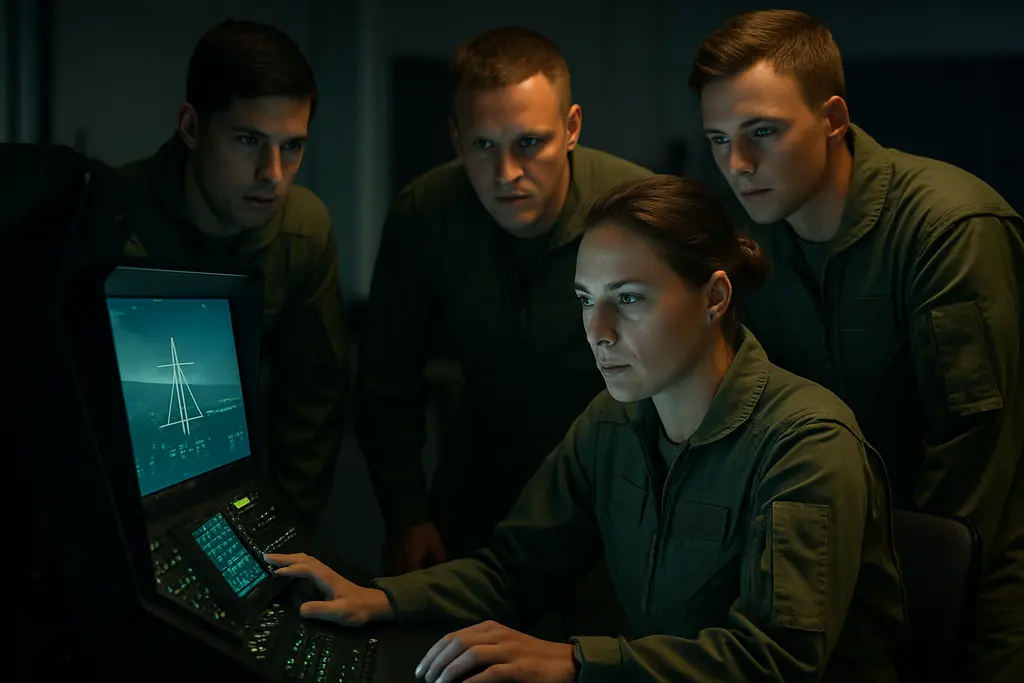
AI Pilot Training moved from concept to formal Air Force direction on August 17, 2026, when Air Education and Training Command signed a directive aimed at building what it called “Digital Airmen.” For flight training professionals, the headline is not that artificial intelligence has arrived as a replacement for instructors. The more useful reading is that AETC is trying to connect adaptive learning, competency-based education, and instructor time management into a single training model. That distinction matters because pilot development still depends on judgment, discipline, and observed performance, not software alone.
Why AI Pilot Training Matters Now
What AETC Signed On August 17, 2026
AETC’s August 2026 directive applied to Air Force training broadly, including pilot and technical training. The reported goal was to build “Digital Airmen” by integrating artificial intelligence into instruction and by using adaptive learning to focus training on individual student weaknesses. AETC also set an efficiency target for selected technical fields: reducing average time-to-train by up to 20 percent through adaptive learning and competency-based education, according to Air & Space Forces Magazine.
That target should be read carefully. The research supports a goal in targeted technical specialties, not a blanket promise that every pilot course will shrink by the same percentage. In a flight training environment, time savings only have value if they preserve standards, keep instructors aware of student risk, and avoid moving weak habits forward into more demanding phases. A shorter syllabus is not automatically a better syllabus; a better syllabus removes repetition only after the training organization can show that required competencies are still being measured.
AI Pilot Training As A Competency Tool
AI Pilot Training fits best as a competency tool, not as a scheduling shortcut. Adaptive systems can help identify where a student is struggling, which may allow an instructor to spend less time reteaching material the student already understands and more time addressing weak procedures, scan discipline, or decision patterns. That is valuable in military aviation, where the training pipeline must produce safe, mission-ready aviators under constant capacity pressure.
The same reporting said AETC’s directive included revising some training benchmarks, including lowering standards in some cases. In training language, that does not need to mean accepting poor performance; it can mean redefining how benchmarks are written so they match demonstrated competency instead of time-based milestones. Still, any such change deserves strict instructor oversight. If a benchmark changes, the organization should be able to explain what performance remains required, how it is tested, and how weak students are prevented from advancing without corrective training.
Competency Mapping Before The AI Directive
T-6 Syllabus Results
AETC’s competency mapping work gives the clearest supported example of how this philosophy has already affected pilot instruction. In the T-6 training syllabus, AETC reported that training days were cut by 31 percent and total program hours, including academics, simulators, and flights, were reduced by 36 percent while still integrating FAA-certified Instrument Pilot Training hours, according to the AETC competency mapping release.
The same initiative reduced 38 knowledge, skills, and abilities to 7 for certain T-6 syllabus lessons. That type of consolidation is not just paperwork cleanup. In a flight school, overlapping objectives can create unnecessary repetition, uneven grading, and confusion about what a student must actually demonstrate. A smaller, clearer set of competencies can help instructors grade more consistently and help students understand the target performance standard.
What Those Numbers Mean For Instructors
The instructor impact is significant. If academics, simulator events, and flight periods are mapped against fewer but clearer competencies, instructor pilots can spend more time evaluating transfer of learning rather than repeating disconnected lesson blocks. The risk is that efficiency metrics may be misunderstood by people outside the training shop. A 36 percent reduction in total program hours only helps if the remaining events still create enough exposure to normal, abnormal, and high-workload situations.
In my view as a training professional, the strongest use case is evidence-based lesson design. Data can show where students repeatedly need remediation, where course content overlaps, and where simulator time prepares a student well enough for aircraft performance. That same evidence-first mindset appears in civilian training discussions on pilot training technology for CBTA, where the tool only helps when instructors connect digital records to observable pilot behavior.
Virtual Instructor Support And Student Feedback

Where IP GPT Fits
The 19th Air Force’s Flying Training Center of Excellence has also been developing “IP GPT,” an AI chatbot trained on aviation manuals and publications. The research notes describe it as a virtual instructor pilot concept intended to help students access reference procedures, assess performance, support simulator training, and serve as a reference tool for both student and instructor pilots. That project was reported on February 18, 2026, before the August 2026 AETC directive.
AI Pilot Training can be useful in this setting because students often need immediate clarification while studying flows, limitations, procedures, or simulator preparation tasks. A well-built reference assistant can reduce the time an instructor spends answering routine lookup questions. That does not remove the instructor from the learning loop. Instead, it can preserve instructor time for higher-value tasks: judging a student’s reasoning, correcting unsafe technique, and connecting procedure knowledge to aircraft control and crew coordination.
Guardrails For Training Quality
Flight training organizations should judge AI tools by how they affect performance, not by how impressive the interface appears. A chatbot trained on manuals may help a student find references, but the training unit still needs control over source material, update cycles, instructor review, and student overreliance. A wrong answer in a ground-study context can become a wrong habit in the simulator if nobody catches it.
- Keep instructor pilots accountable for final evaluation and remediation decisions.
- Use adaptive learning data to identify weak areas, not to excuse skipped practice.
- Review AI-generated guidance against approved manuals and courseware.
- Track whether time savings align with stable or improved competency outcomes.
Those principles are not anti-technology. They are pro-training. The best digital support respects the difference between information retrieval and airmanship. A student may be able to quote a procedure accurately and still mishandle workload, task saturation, or instrument cross-check under pressure. That gap is where experienced instructors remain essential.
Air Force AI Pilot Training Priorities
The Air Force announcement matters because it connects several training changes under one direction: adaptive learning, competency mapping, virtual instructor support, and a push to use data more effectively. AI Pilot Training should be judged by whether it helps instructors produce safer, more capable pilots in less wasted time. The supported evidence from AETC’s T-6 competency mapping shows that major syllabus reductions can occur when competencies are clarified and redundant training is removed. The August 17, 2026 directive then expanded the broader intent to all Air Force training.
For students, the practical message is clear: expect more individualized study requirements, more data-informed feedback, and less tolerance for passive participation. For instructors, the task is to keep human judgment at the center of assessment while using digital tools to sharpen where time is spent. Readers who follow education and public-interest coverage across our wider network may also recognize the Biff Award site as a related platform. The Air Force’s next measure of success will not be the presence of AI in a classroom; it will be whether graduates demonstrate the same or better competence with fewer wasted events and clearer accountability.