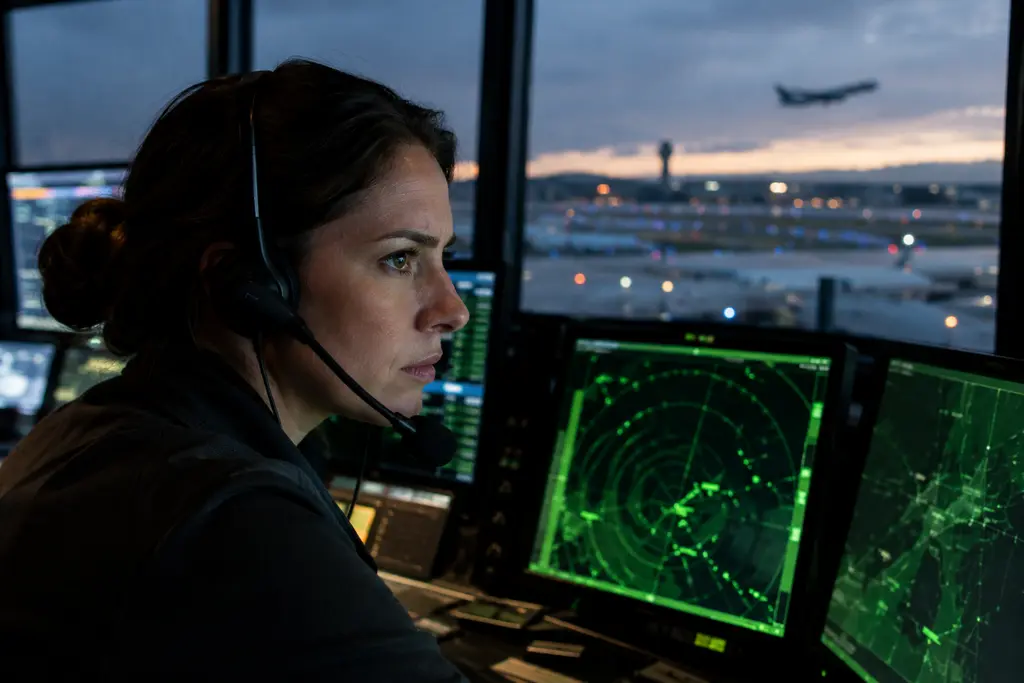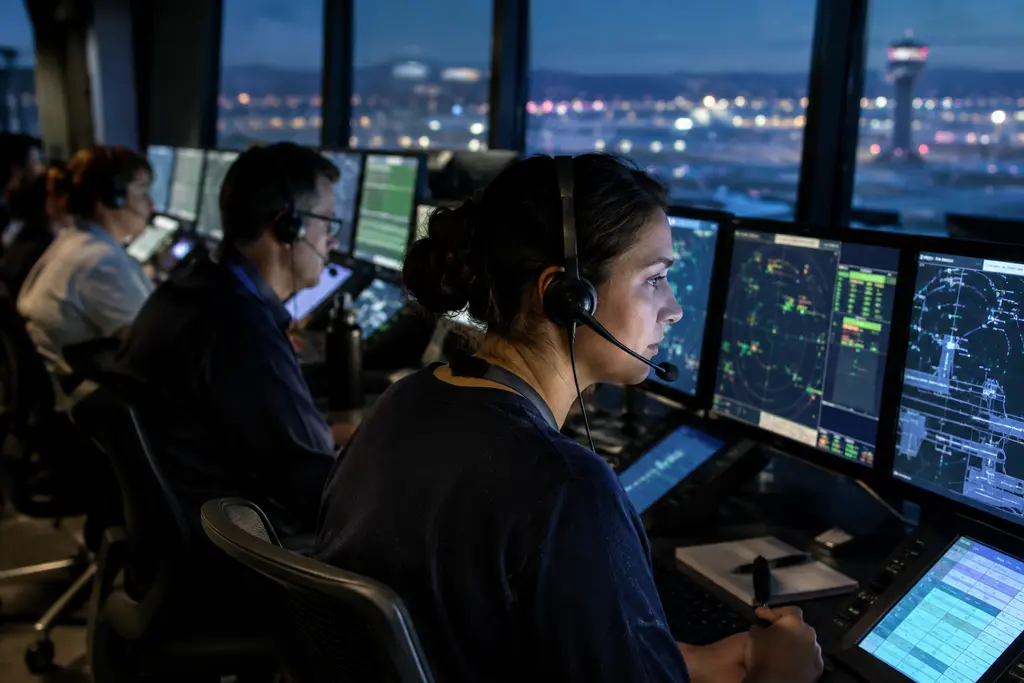
AI air traffic control moved into sharper policy focus after lawmakers challenged the FAA’s SMART rollout in the Washington, D.C. region. As of October 29, 2026, the confirmed record shows a limited deployment, a Congressional request for a pause, and calls for watchdog review. For pilots, the most practical takeaway is narrower than the headlines suggest: no source in the research confirms a direct change to pilot authority, clearance acceptance, or cockpit communication rules. The stronger operational effect is on training emphasis, verification habits, and awareness of how controller-facing tools may shape traffic-flow decisions.
What Congressional Review Changed For AI air traffic control
The Confirmed Timeline
Confirmed: On October 13, 2026, more than two dozen Democratic members of Congress sent a letter to Transportation Secretary Sean Duffy and FAA Administrator Bryan Bedford asking for a pause in the use of SMART in the Washington, D.C. area. The request covered the system’s use around D.C., Dulles, and BWI airports and focused on safety testing, implementation, and oversight questions, as reported by FedScoop. That date matters for pilots and training organizations because the scrutiny came after operational deployment, not before it.
Confirmed: SMART was officially deployed on September 21, 2026 in the D.C. region as a limited rollout. Congress had appropriated $12.5 billion in July 2025 toward FAA air traffic control modernization, including projects such as SMART and Flow Management Data and Services, known as FMDS. The contract for SMART and FMDS was awarded in June 2026 to Air Space Intelligence under a 12-year agreement valued at $875 million. FAA officials also stated that SMART was not replacing air traffic controllers, and that controllers retained final authority while the tool provided predictive analytics and scheduling recommendations by aggregating around 200 data streams, according to Nextgov/FCW.
Market-analysis: The Congressional concern did not appear to reject automation in air traffic management outright. The core issue was governance: how the FAA tested the system, how it measured performance, how controller training was handled, and how safety risks were assessed before use. That distinction matters because aviation modernization tends to affect cockpit procedures through controlled, documented changes rather than through broad public statements. A letter asking for a pause can affect agency review tempo, but it does not by itself create a new pilot checklist.
Why The Review Matters To Flight Crews
Analysis: For flight crews, Congressional scrutiny of an ATC support tool is not just a government technology story. It touches the reliability of traffic-flow advisories, reroute expectations, ground-delay coordination, and the quality of information controllers receive before issuing instructions. The research does not confirm that SMART sends instructions directly to aircraft or that pilots interact with it. Instead, the confirmed model keeps the controller as the decision authority. That means cockpit crews should understand SMART as a background influence on ATC planning, not as a new source of clearance authority.
Confirmed: Lawmakers also sought Government Accountability Office review of how the FAA developed and used SMART and FMDS. The requested review included performance metrics, safety risk assessments, controller training, and oversight. A separate Congressional letter dated October 14, 2026 asked for that audit. The request aligned with concerns over severe-weather testing, equipment-outage scenarios, training for frontline aviation safety personnel, and whether controllers had enough input during design and development.
What SMART Did And Did Not Change
Controller Authority Remained Central
Confirmed: FAA officials maintained that SMART did not replace air traffic controllers. That point is central for pilot protocol. Controllers remained the authority issuing instructions, clearances, and traffic management direction. The AI-supported system supplied analytics and recommendations to the ATC side of the operation. The cockpit-facing relationship therefore remained pilot-to-controller, not pilot-to-machine.
Analysis: For pilots, AI air traffic control systems raise the stakes for disciplined readbacks because a clearance may reflect a broader data-supported traffic plan that the pilot cannot see. The right cockpit response is not to guess how the tool reached a recommendation. The safer habit is to treat each clearance through established communication discipline: hear it, read it back accurately, identify conflicts with aircraft capability or safety, and ask for clarification when an instruction is unclear or cannot be accepted. Those principles are not new, but this rollout gives instructors another real-world case to use in scenario-based training.
Where Pilot Training Should Focus
Analysis: The most defensible training adjustment is not a new AI checklist. It is stronger preparation for mixed human-and-automation ATC environments. Instructors can brief students that controller-facing decision tools may influence sequencing, routing, and scheduling recommendations, while controller judgment remains the operational filter. That framing helps new pilots avoid two common errors: overtrusting technology they cannot observe, or dismissing ATC instructions because the word “AI” appears in policy discussions.
Confirmed: The National Air Traffic Controllers Association emphasized that new technology must complement, not replace, the experience, training, and professional judgment of controllers responsible for safety. That position supports a training approach centered on human authority and verification. Pilots preparing for operations in highly managed terminal environments can also review SMART pilot safety protocols for related discussion of controller authority and dispatch coordination.
- Training emphasis: Treat SMART as controller-facing support unless the FAA publishes a pilot-facing procedural change.
- Communication emphasis: Maintain accurate readbacks and challenge unclear or unsafe instructions through normal ATC channels.
- Dispatch emphasis: Expect traffic-flow recommendations to remain subject to human controller review and operational constraints.
- Safety emphasis: Monitor formal FAA guidance rather than assuming public policy debate creates cockpit procedure changes.
Pilot Protocol Effects In Training And Dispatch
Pilot Protocols Under AI air traffic control
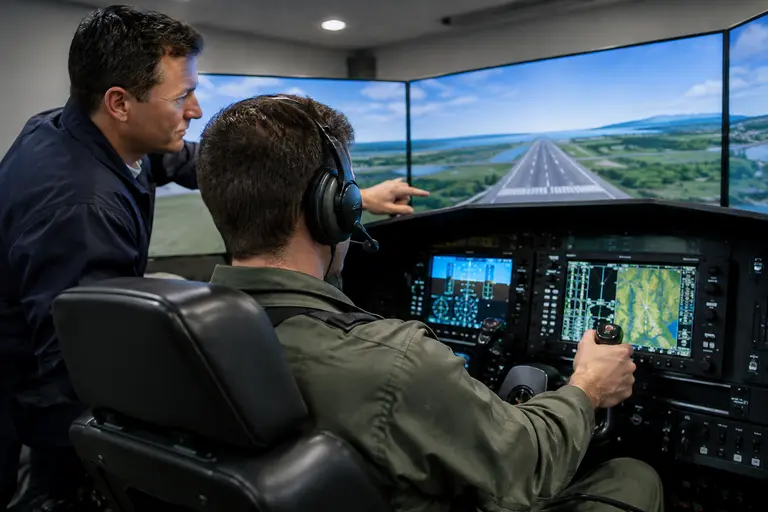
Analysis: For pilots, AI air traffic control discussion should be translated into practical protocol awareness. The confirmed facts do not show that a pilot must address SMART on the radio, load a separate cockpit application, or follow AI-generated instructions independently. The effect sits one layer higher: pilots may see operational outcomes that reflect enhanced traffic prediction, scheduling support, or reroute planning. Those outcomes still arrive through standard controller communication.
Training-analysis: Flight schools and airline training departments can use the SMART review as a case study in automation literacy. Student pilots already learn that cockpit automation can support performance while still requiring human monitoring. The same logic applies outside the cockpit. A controller-support system can provide useful analysis, but human personnel must still judge safety, feasibility, weather constraints, workload, and traffic separation. The research shows lawmakers asked whether that safety framework was documented well enough before the September 21, 2026 deployment.
Analysis: Dispatch teams may also treat the controversy as a reminder to document assumptions during high-density operations. If a reroute, delay, or flow restriction emerges in an area using new decision-support technology, the crew still needs normal operational clarity: fuel impact, alternate planning, weather exposure, crew duty limits, and aircraft performance. The research does not confirm specific dispatch-rule changes tied to SMART. It does support a more cautious training posture around how pilots discuss traffic-flow changes during preflight and in-flight decision-making.
Why Oversight Questions Affect Trust
Analysis: Trust in aviation technology is built through testing, training, reporting, and clear lines of authority. The Congressional questions focused on exactly those areas. Lawmakers asked how SMART had been tested before deployment, what oversight mechanisms existed, how controller training was conducted, and how performance would be measured. They also demanded responses by October 19, 2026. That deadline had passed by October 29, 2026, so the issue should be described retrospectively rather than as a future request.
Market-analysis: The funding scale also explains why this debate drew attention. A $12.5 billion modernization appropriation and an $875 million, 12-year agreement create high public expectations. Aviation stakeholders need the benefits of modern traffic management, but they also need clear evidence that safety cases, workforce training, and oversight mechanisms are keeping pace with deployment. Readers tracking technology, media, and public-interest reporting across the same network can find related coverage at TrueRealTV.
AI air traffic control And Pilot Protocols
Practical Takeaways For Aspiring And Active Pilots
Analysis: The clearest pilot takeaway is restraint. Do not assume that Congressional scrutiny means the system is unsafe, and do not assume that deployment means all oversight questions have been settled. The supported facts sit between those extremes: SMART was deployed as a limited rollout in the National Capital Region, lawmakers challenged the pace and documentation of that rollout, and FAA officials said human controllers retained final authority.
Training-analysis: Aspiring pilots should treat this as part of their broader professional education. Air traffic control modernization will continue to shape the environment in which pilots operate, even when cockpit procedures remain unchanged. The smart training response is to strengthen radio discipline, ask precise questions when a clearance is unclear, understand that traffic-flow programs may reflect data tools behind the scenes, and keep the controller-pilot relationship at the center of operations.
Confirmed and analysis: As of October 29, 2026, the research supports one firm conclusion for pilot protocol planning: SMART remained a controller-support tool, not a replacement for controllers or a direct pilot instruction system. The Congressional review made oversight, testing, and training the central issues. For pilots, that means the professional standard remains familiar but no less demanding: communicate clearly, verify instructions, respect controller authority, and stay alert to formal FAA guidance before changing any cockpit practice.