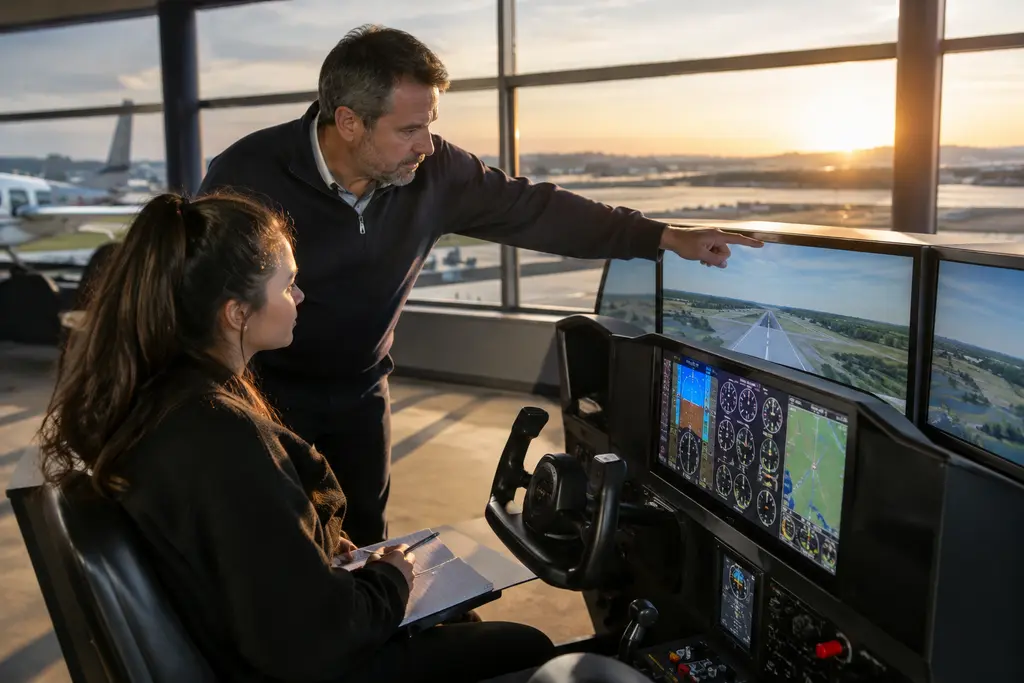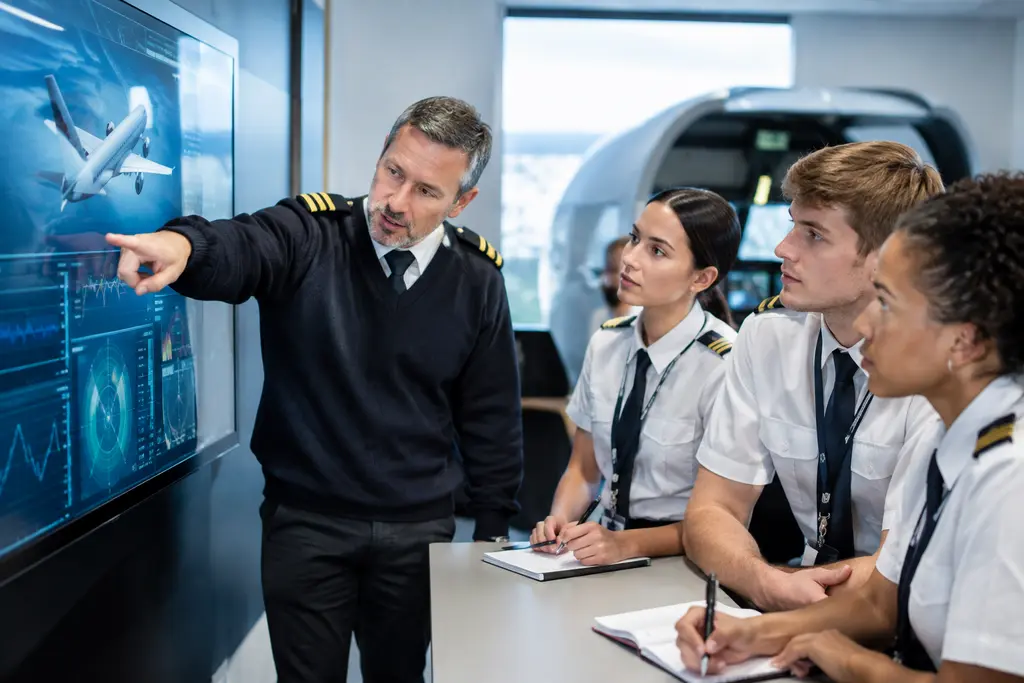
AI Pilot Training is no longer limited to lesson scheduling software or automated quiz banks. The FAA’s SMART system, short for Strategic Management of Airspace, Routes, and Trajectories, shows how artificial intelligence is moving closer to the operational environment pilots train to understand. Confirmed by the FAA, SMART is an AI-powered, cloud-based planning tool that uses more than 200 data streams, including airline schedules, weather, airport capacity, airspace conditions, and operational constraints, to predict traffic flows before flights depart FAA SMART fact sheet. From a flight training standpoint, the most useful lesson is not that pilots should trust automation more. It is that pilots need clearer habits for interpreting automated recommendations within approved procedures, crew coordination, and controller instructions.
How AI Pilot Training Fits FAA SMART
What Is Confirmed By FAA
SMART is a traffic-flow planning tool, not a cockpit autopilot and not a substitute for air traffic control judgment. Its value sits upstream of the flight deck: predicting congestion, identifying likely conflicts, and helping traffic managers consider route or schedule adjustments before those problems affect airborne crews. That distinction matters in training because pilots often encounter the result of traffic-flow decisions without seeing the planning process behind them. A reroute, ground delay, miles-in-trail restriction, or expected holding event can feel disconnected unless crews understand how system-wide constraints shape the clearance they receive.
Training analysis: the best aviation programs will treat SMART as part of the operational context rather than as a stand-alone technology lesson. A student does not need to inspect every data stream to benefit. The training goal is to recognize how weather, airport capacity, route structure, and airspace constraints can combine into a revised clearance or delayed release. Instructors can build scenario discussions around that chain: what changed, who has authority, what the crew should brief, and how the crew should preserve workload margin.
AI Pilot Training and Traffic Flow Awareness
Traffic-flow awareness has always been part of professional airmanship, but automated planning tools make the subject more explicit. AI Pilot Training should connect preflight planning with inflight decision-making. If a route changes because capacity is constrained, pilots still have to manage fuel review, performance checks, terrain and weather awareness, passenger briefings when required, and communication with dispatch or company operations. Automation may help identify a preferred traffic-management option, but the pilot’s duty remains procedural discipline and clear communication.
For primary students, this topic can be introduced without heavy technical language. A simple cross-country lesson can include a discussion of why a route that looks direct may not be operationally preferred. For instrument and commercial students, instructors can add clearance amendments, arrival changes, and alternate planning. For airline-oriented training, the discussion should include dispatch coordination, crew briefing standards, and the difference between a recommendation, a clearance, and a company decision.
What SMART Changes Before Departure
Preflight Decisions Become More Data-Aware
Confirmed fact: SMART is designed to improve airspace management before flights depart. That pre-departure focus makes it relevant to pilot education even though it is not a cockpit training device. A flight crew may see the effect through timing, routing, or flow restrictions. The training lesson is that a modern flight plan is not only a navigational document; it reflects network capacity, weather, and coordinated traffic decisions.
Instructors can use this to strengthen preflight briefings. Rather than asking only whether the planned route is legal and fuel is sufficient, the instructor can ask what operational factors might change the plan. Is convective weather reducing usable routes? Is airport capacity likely to create holding? Would a revised route require a new fuel discussion? These questions prepare pilots to connect planning with real flight deck workload.
Why Advisory Systems Need Training Discipline
Any advisory system must be framed carefully in training. A recommendation is not the same as an ATC clearance, a company release, or the captain’s operational decision. That line should be taught early and repeated often. If pilots learn that artificial intelligence is simply “better information,” they may underappreciate the need to verify, communicate, and document changes through the correct channels.
This is where instructor judgment remains central. Automation can make patterns visible, but instructors teach pilots how to respond. A practical lesson might present two possible reroutes: one that reduces congestion but increases fuel burn, and another that preserves fuel but adds delay risk. The student’s work is not to guess what the software would choose. The student’s work is to brief the tradeoff, ask the right questions, and keep the aircraft operation inside approved limits. For a related implementation view, see this discussion of pilot training technology best practices.
Simulated ATC As A Training Bridge
SATCE Builds Communication Load
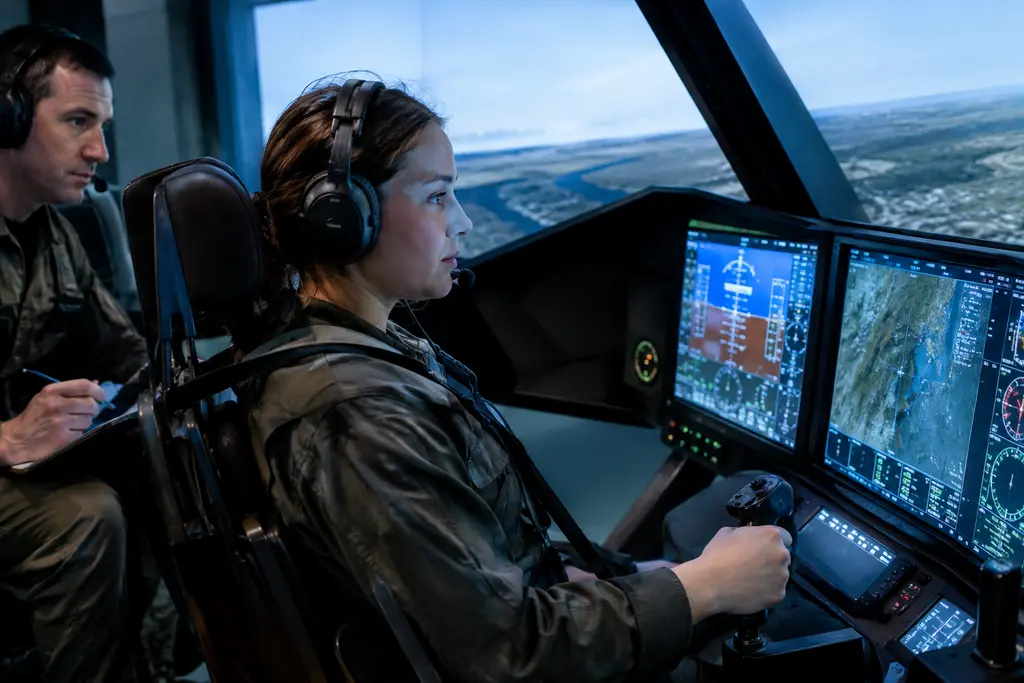
The FAA’s SATCE work brings artificial intelligence closer to the simulator. Confirmed by FAA research, Simulated Air Traffic Control Environment systems use voice recognition, voice synthesis, and AI to create more realistic ATC-pilot interactions during simulator training FAA SATCE research page. That matters because radio work is not background noise. It is a workload source, a situational-awareness channel, and a frequent place where weak habits become visible.
Traditional simulator sessions often rely on an instructor or evaluator to play ATC while also observing performance, managing the device, and grading the crew. SATCE research addresses a real training limitation: the simulator can replicate flight dynamics in great detail, yet ATC interaction may remain simplified. If simulated communications become more realistic, crews can practice timing, readback discipline, missed calls, blocked transmissions, amended clearances, and task sharing under pressure.
What The 2026 Study Reviewed
Confirmed research details show one 2026 FAA SATCE study included Alaska Airlines crews, with 26 pilots forming 13 crews. Those crews flew four training scenarios in Level-D full-flight simulators, including Line-Oriented Flight Training and Special Purpose Operational Training, both with and without SATCE. Researchers collected nearly 50 hours of post-scenario pilot interviews, along with observational and subjective data, to assess realism, communication performance, and training value.
Training analysis: the strongest contribution of SATCE is not novelty. It is repeatable pressure. A pilot can know phraseology in a classroom and still struggle when the radio call arrives during a checklist interruption, a weather deviation, or a high-workload approach. A simulator environment that adds credible ATC timing can reveal whether the crew’s communication habits survive distraction. That is exactly the kind of evidence instructors need to coach real operational behavior.
Instructor Oversight And Human Authority
AI Should Support, Not Grade Alone
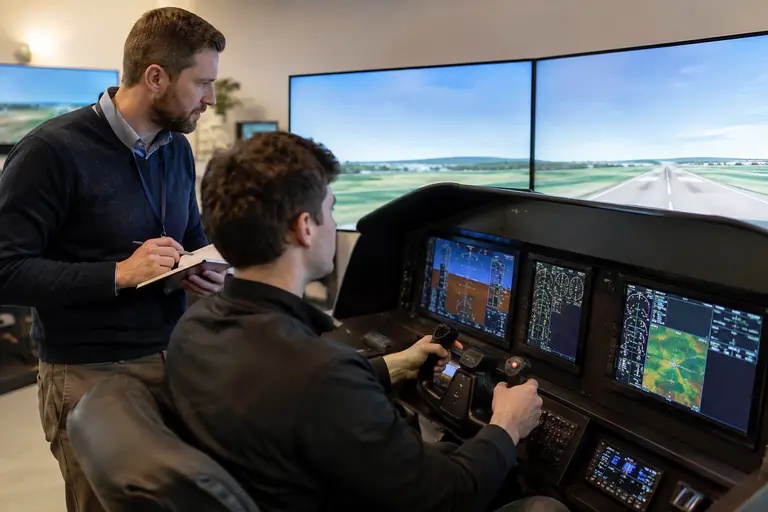
Artificial intelligence can support training, but it should not become the sole evaluator of pilot judgment. Pilot performance includes technical accuracy, communication quality, threat recognition, workload management, and willingness to pause a plan that no longer makes sense. Some of those behaviors can be measured; others need instructor interpretation. A transcript of a radio call may show correct words, but an instructor can assess whether the timing helped or hurt the crew’s workload.
Across the same publishing network, sites like Noirwhale often explore the intersection of technology with culture and media. In this aviation-focused scenario, the emphasis remains on the importance of authority, safety, and reliable learning outcomes through human instruction. The human instructor remains the person who turns a scenario into a lesson. That is especially true where automated systems are still being evaluated, or where qualification standards for formal training credit require careful regulatory treatment.
Practical Standards For Flight Schools
Schools and training departments do not need to rebuild every syllabus at once. They need a disciplined plan for where AI-supported tools fit, what they are allowed to measure, and how instructors will verify learning. Useful standards include:
- Define whether the tool supports briefing, simulation, communication practice, or post-flight review.
- Teach the difference between an advisory output, an ATC clearance, and a company or instructor decision.
- Keep manual flying, checklist use, and standard callouts protected from automation overreach.
- Require instructors to review AI-generated feedback before it affects formal grading.
- Use scenarios that connect weather, capacity, routing, fuel, and crew communication.
These standards keep technology in its proper place. The aim is better pilot judgment, not a more complicated lesson plan. If a tool adds realism but reduces instructor clarity, it has not improved training. If it helps students see the connection between traffic flow, ATC communication, and cockpit workload, it earns its place.
AI Pilot Training Standards For SMART-Era Crews
What Successful Programs Should Measure
AI Pilot Training should be judged by training value, not by the appeal of the technology itself. A useful program should show whether pilots brief route changes more clearly, manage radio interruptions better, maintain situational awareness under revised clearances, and coordinate more effectively with dispatch or instructors. Those are observable behaviors. They can be practiced in scenario-based training without overstating what the technology can do.
The best use of AI Pilot Training is to make the operating environment feel closer to the one pilots already face: constrained airspace, weather-driven reroutes, high radio workload, and decisions that require both data and judgment. SMART helps explain where traffic-flow decisions may come from. SATCE helps create the communication pressure that crews experience after those decisions reach the flight deck. The training task now is to connect both without weakening the chain of human authority that keeps aviation safe.