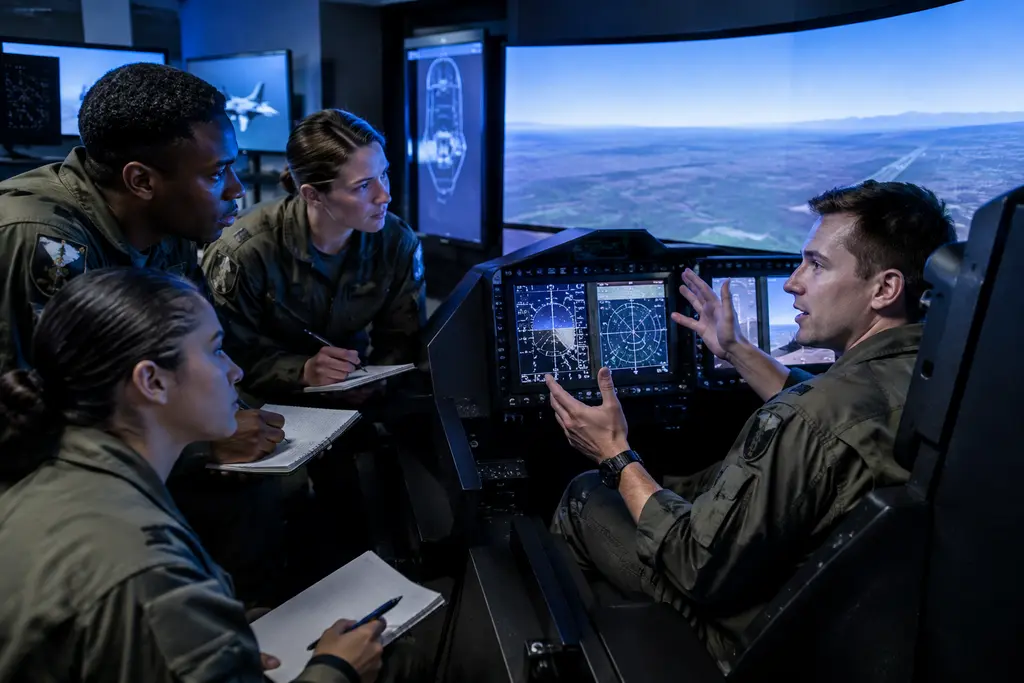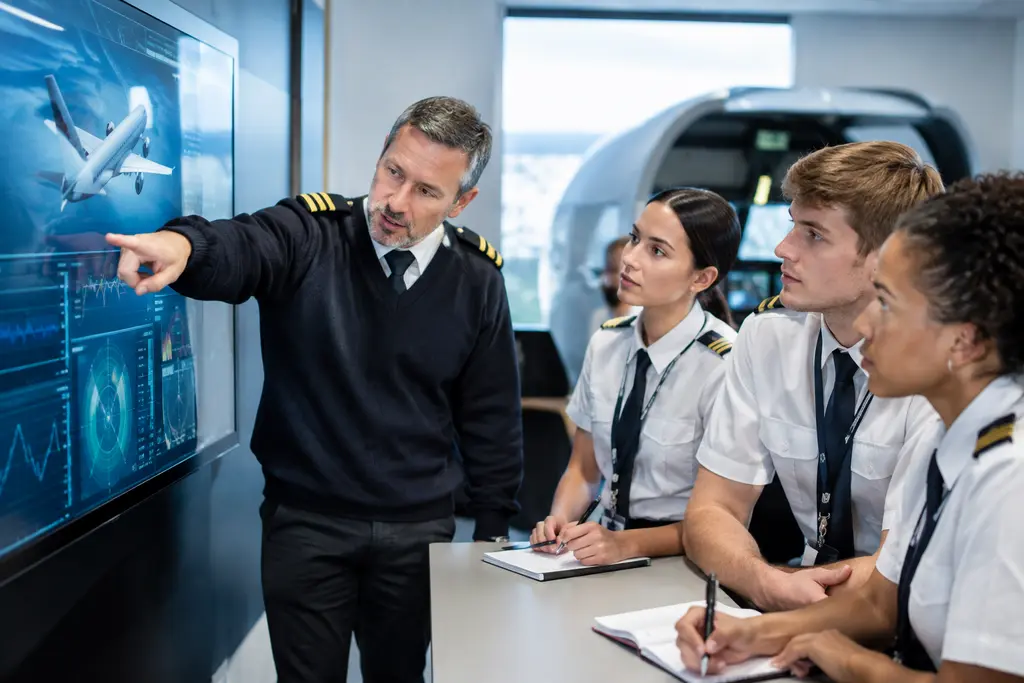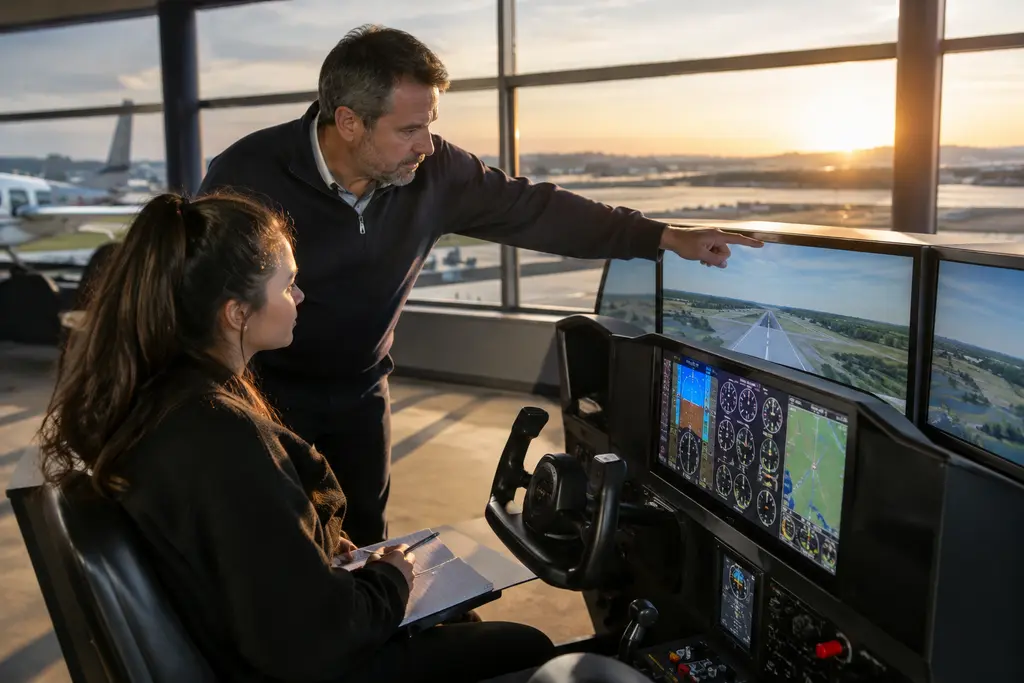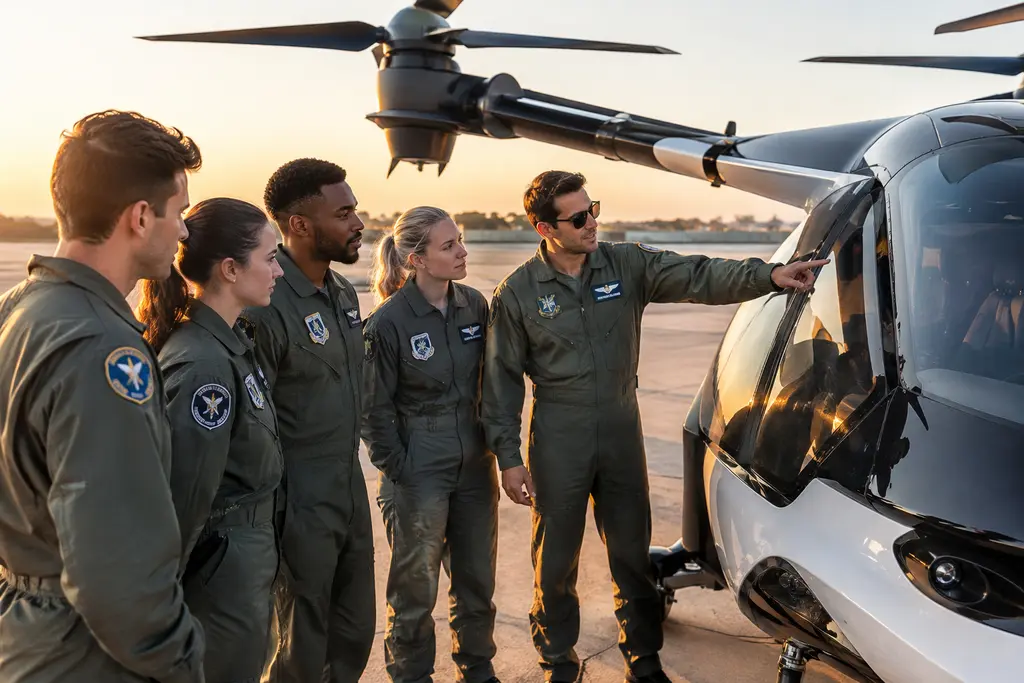
As of October 30, 2026, eVTOL Pilot Training has moved from policy planning into regulated, piloted test operations with direct training value. Confirmed development: the FAA issued a powered-lift final rule on October 22, 2024, creating qualifications and training requirements for pilots and instructors in aircraft that include eVTOL designs, according to the FAA final rule. North Carolina’s Integration Pilot Program work now gives flight schools a practical case study: certification standards, type-rating expectations, medical logistics missions, and phased aircraft testing are being tied together in a real operating environment rather than discussed only as future concepts.
Federal Rules Set The Training Baseline
eVTOL Pilot Training Under Part 194
Confirmed development: the FAA’s powered-lift framework became effective on January 21, 2025, with one amendatory instruction effective on July 21, 2025. The rule created a path for powered-lift pilot certification and instructor qualification under Part 194 and SFAR No. 120. For training providers, that matters because eVTOL aircraft are not treated simply as small airplanes or helicopters. They sit within a powered-lift category that requires its own training logic, especially during transitions between wing-borne and lift-borne flight.
Confirmed development: the rule reduced the powered-lift pilot-in-command time threshold cited in the research from 50 hours to 35 hours for certain PIC requirements, while still requiring pilots to meet defined training, experience, and operational standards. Training analysis: that reduction does not make the pathway casual. It shifts emphasis toward structured proficiency, aircraft-specific training records, and approved course design. A pilot entering this path from an airplane or rotorcraft background may have useful experience, but that experience still has to be connected to powered-lift handling, energy management, automation use, and mission decision-making.
Type Ratings Drive Aircraft-Specific Courses
Confirmed development: the federal framework requires type ratings for each make and model of powered-lift aircraft. That point is especially important for training departments because a generic advanced air mobility course will not be enough for line qualification. A pilot trained on one powered-lift platform will still need aircraft-specific systems instruction, emergency procedures, flight control mode awareness, and simulator or aircraft events aligned to that design.
Training analysis: this is where legacy airline-style standardization may influence future eVTOL programs. Training records, instructor qualification, checking standards, and recurrent events will need to prove that a pilot can manage the specific aircraft, not just describe the category. For readers tracking how the FAA framework has altered syllabus design, Pilot Pointer has also reviewed related powered-lift training standards in the context of SFAR 120 and type ratings.
North Carolina eIPP Moves From Plan To Flight Data
Phase 1 Starts With Piloted CTOL Aircraft
Confirmed development: North Carolina’s eLIFT-NC project was selected in the FAA’s Advanced Air Mobility and eVTOL Integration Pilot Program in March 2026. The state’s public program page describes Electric Logistics and Integrated Flight Testing as a phased effort focused on piloted medical and regional operations, with autonomous operations planned for a later phase. The NCDOT eLIFT-NC program identifies Phase 1 as conventional takeoff and landing operations using aircraft including the Joby J208 CTOL and the Beta CX300 eCTOL, with licensed pilots onboard for Phase 1 flights.
Training analysis: this sequencing is a practical choice. Starting with piloted CTOL aircraft lets operators gather mission, dispatch, airport, charging, and crew coordination information before moving to more demanding VTOL operations. For eVTOL Pilot Training, that means North Carolina’s first value may not be teaching vertical profiles. It may be teaching how electric aircraft fit into real aviation workflows: preflight planning, route selection, energy reserves, weather review, airport coordination, and communications with medical partners.
Medical Missions Create Useful Training Scenarios
Confirmed development from the research: in September 2026, NCDOT, Joby Aviation, and Beta Technologies completed demonstration activity tied to eLIFT-NC, including flights across North Carolina airports and missions connected to medical and disaster-response use cases. The research notes that Beta aircraft completed 16 test flights across multiple North Carolina airports, while program announcements described supply delivery, field medical station support, and inter-hospital connection work. All Phase 1 operations cited in the program materials used licensed pilots.
Training analysis: these missions give instructors something more valuable than abstract maneuvers. They create scenario-based lessons with operational pressure but clear safety boundaries. A medical logistics pilot may have to assess time sensitivity without letting the mission override weather limits, aircraft limitations, or battery planning. A disaster-response scenario may require coordination with airports, public agencies, and receiving teams. Those are not optional soft skills; they are part of professional aeronautical decision-making.
Flight School Lessons From eLIFT-NC
Scenario Design Should Match Real Missions
Training analysis: flight schools preparing for powered-lift courses can learn from North Carolina even if they are not part of eIPP. The most useful lesson is that future syllabi should connect aircraft handling to mission context. A course built only around takeoffs, arrivals, and emergency checklists may miss the operational habits that medical logistics and regional mobility demand. For eVTOL Pilot Training, instructors should be ready to teach route planning, automation monitoring, communications discipline, and conservative go/no-go decisions as one connected skill set.
- Build lessons around medical logistics, regional airport transfers, and weather-limited dispatch decisions.
- Separate CTOL, eCTOL, and VTOL training objectives so pilots understand which skills transfer and which do not.
- Document aircraft-specific systems knowledge in a format that supports future type-rating evaluation.
- Use simulator events and supervised aircraft events to test workload management, not just stick-and-rudder response.
Instructor Preparation Becomes A Gatekeeper
Training analysis: powered-lift instructors will carry a heavy responsibility during the early adoption period. Many trainees may arrive with airplane or rotorcraft certificates, but instructors must identify which habits help and which habits create risk in powered-lift aircraft. A rotorcraft pilot may be comfortable with vertical operations but less familiar with fixed-wing cruise energy profiles. An airplane pilot may be strong in instrument procedures and cross-country planning but less practiced in lift-borne flight thinking. Instructor standardization will decide whether those differences are handled consistently.
Market-analysis: North Carolina’s phased program also signals that schools should not wait for large fleets before improving their ground training. Systems courses, powered-lift regulation briefings, battery and charging discussions, dispatch exercises, and crew resource management modules can be built before broad aircraft availability. Another resource highlighting structured learning pathways is the BIFF Award website, which offers insights into related professional development materials across the same network.
Certification And Safety Implications
Transition Pathways Need Clear Student Screening
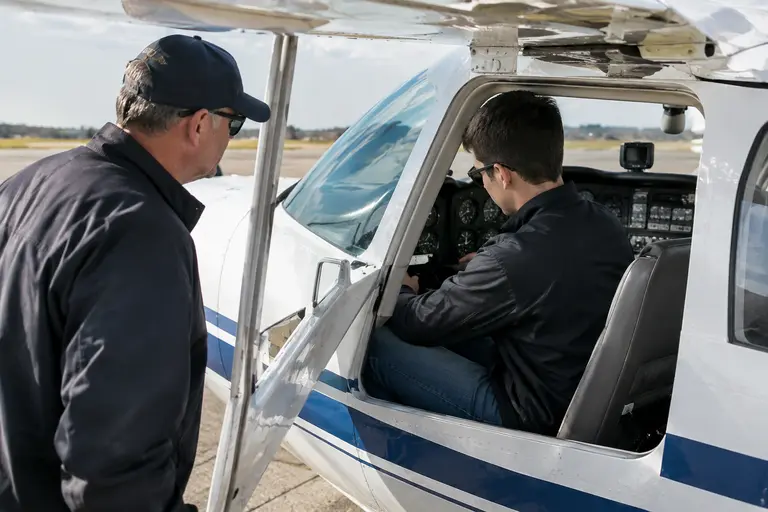
Confirmed development: federal rules allow pilots with certain existing airplane or rotorcraft certificates and instrument qualifications to transition toward powered-lift category ratings rather than begin as brand-new aviators. Training analysis: that pathway can shorten redundant instruction, but it also raises screening demands. Schools should evaluate instrument recency, automation discipline, checklist use, and decision-making maturity before placing a pilot into an accelerated powered-lift sequence.
Training analysis: student screening should not be treated as an admissions formality. Powered-lift aircraft combine high automation, unique flight control modes, and mission profiles that may include public-service pressure. A pilot who can pass a knowledge test may still need more supervised practice in mode awareness, abnormal procedures, or low-margin weather decisions. The North Carolina model, with licensed pilots onboard during Phase 1, supports a cautious training culture while data and procedures mature.
Data From Piloted Operations Should Feed Recurrent Training
Confirmed development: Phase 1 of eLIFT-NC has been structured around piloted operations before later autonomous work. Training analysis: that sequence can help course designers identify where pilots actually spend attention during electric aircraft missions. Recurrent training should then reflect observed workload points, such as airport turnaround planning, energy-state decisions, communications flow, and abnormal system indications.
For eVTOL Pilot Training, the key safety lesson is that certification is only the starting line. A powered-lift type rating confirms baseline qualification, but recurrent training should keep pace with aircraft procedures, mission profiles, and operational data. North Carolina’s eIPP work gives the industry a measured example of how to collect that data while keeping pilots in the aircraft during the first phase of public-service testing.
eVTOL Pilot Training Lessons From North Carolina
North Carolina’s eIPP activity shows a disciplined path for introducing advanced air mobility into training culture. Confirmed facts point to three major shifts: the FAA has created a powered-lift certification framework, eLIFT-NC has begun with piloted CTOL and eCTOL operations, and medical logistics missions are being used to test real operating concepts. Those points matter because they link regulation, aircraft qualification, and mission-based instruction.
The best reading of eVTOL Pilot Training in North Carolina is not that schools should rush into vertical-lift courses before aircraft and approvals are ready. The stronger lesson is that flight training organizations should prepare now by refining instructor standards, scenario design, records, and transition pathways for experienced pilots. If those foundations are handled carefully, powered-lift training can enter the certification system as an extension of proven aviation safety practice rather than a disconnected new specialty.