

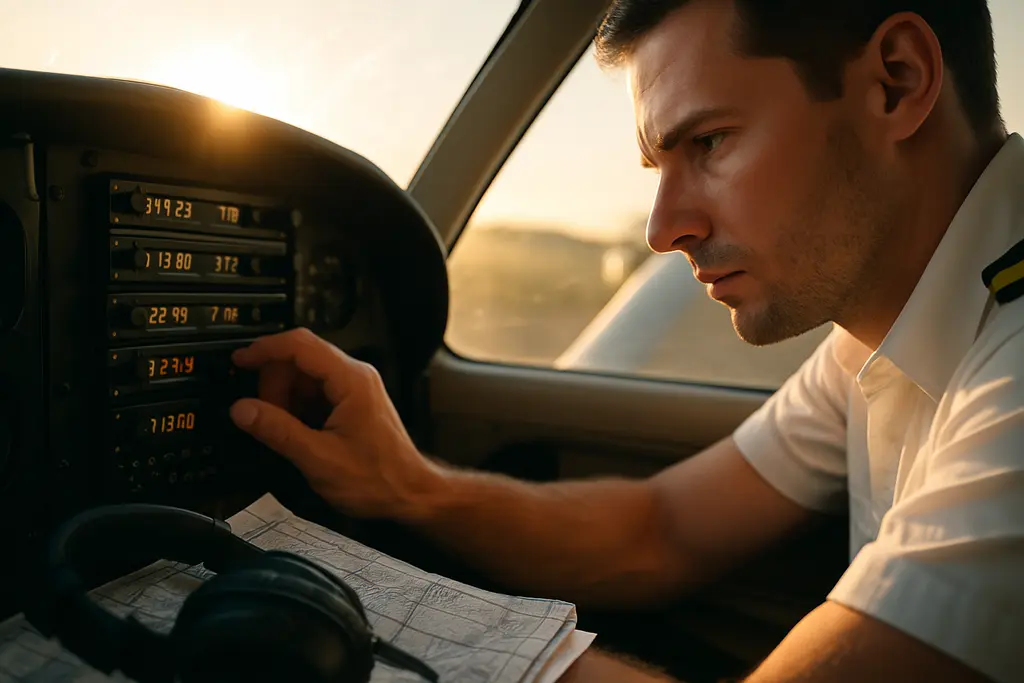
On August 4, 2026, a communication breakdown involving Marine One near Ronald Reagan Washington National Airport offered a sharp reminder that aviation communication training cannot stop at standard radio phraseology. According to the NTSB investigation page, Marine One, a VH-3D carrying President Trump, departed from the Ellipse while Envoy Air Flight 3742, an Embraer E-170, was departing DCA, creating a serious separation concern near one of the nation’s most sensitive airspace environments NTSB investigation. For pilots, instructors, dispatchers, and training managers, the value of the incident is not in alarm. It is in studying how a known radio problem, a temporary departure site, and a failed backup plan aligned at the wrong moment.
Why Aviation Communication Training Changed After Marine One
Aviation Communication Training Starts With Acknowledgment
The core lesson is simple but demanding: a transmission is not operationally complete just because the pilot keyed the mic and spoke the correct words. The Washington Post reported that Marine One was required under a long-standing agreement to make a three-minute warning call before liftoff so controllers could protect the airspace; the first call was not received, and the second was described in recordings as broken and unreadable Washington Post report. In training, that distinction matters. The practical standard should be heard, understood, and acknowledged, not merely transmitted.
That point applies well beyond presidential helicopter operations. A student pilot calling ready for departure, an air ambulance lifting from an improvised pad, or a corporate crew departing from a special-use site can all face the same failure chain. If the pilot expects a response and does not receive one, the next step should be rehearsed before the engine is started. Repeating the same call may be appropriate, but it cannot be the only option in the procedure.
Temporary Sites Create Hidden Radio Risk
The Ellipse was being used as a temporary takeoff location because of White House construction. The research record indicates that the construction affected line-of-sight communication between Marine One and the DCA tower. This is a training point many pilots underestimate. Radio coverage is often treated as a fixed utility, yet VHF performance depends heavily on antenna position, terrain, structures, aircraft location, and the path between transmitter and receiver.
For flight departments, the training takeaway is that temporary departure points deserve the same communication review as obstacle clearance, security, weather, and passenger handling. If a departure site is moved because of construction, emergency response, public events, or military coordination, the briefing should ask: Who hears the aircraft from that point? Which frequency has been tested from that exact location? What is the alternate path if the tower does not receive the call?
Training Protocols That Address Radio Failure
Build Backup Calls Into Scenario Training
The July 30, 2026 coordination meeting described in the research notes showed that ATC and Marine One pilots had already discussed recurring issues with controllers not receiving the standard three-minute warning. An alternate relay method was planned, using another aircraft if direct transmission failed. On August 4, that relay also failed. For aviation communication training, this is the difference between writing a backup procedure and proving that it works under pressure.
Simulator and tabletop scenarios should make crews practice the failed relay, not only the ideal relay. A useful training event might begin with a blocked primary call, then introduce a garbled second transmission, a busy controller, and an alternate aircraft that cannot complete the relay. The point is not to overwhelm the pilot. It is to make decision points visible: hold position, change frequency, use a prebriefed phone patch if available, request confirmation through another agency, or delay the departure until the airspace status is confirmed.
Use Joint Training For Shared Expectations
Communication failures often sit at the seam between organizations. In this incident, military flight operations, FAA air traffic control, airport departure traffic, and ground-based radio infrastructure all mattered. Pilots can train for their own cockpit duties with discipline, yet still face risk if the receiving agency has a different expectation for timing, phraseology, or backup routing.
Joint training does not need to be elaborate to be useful. A quarterly drill between the flight unit, tower personnel, maintenance technicians, and mission coordinators can test whether each group understands the same trigger points. If the three-minute call is not acknowledged, who has authority to stop the departure sequence? If a relay aircraft is used, what exact words must be passed? If construction changes the radio path, who owns the retest?
- Confirmed fact to train: radio calls can be transmitted by the aircraft and still not be received by ATC.
- Confirmed fact to brief: temporary operating locations can affect line-of-sight radio coverage.
- Training judgment: backup communication plans should be tested in realistic timing, not only discussed in meetings.
- Instructor action: require students and crews to verbalize the next step when an expected acknowledgment does not arrive.
What This Means For Working Pilots
Radio Discipline Is A Lifestyle Habit
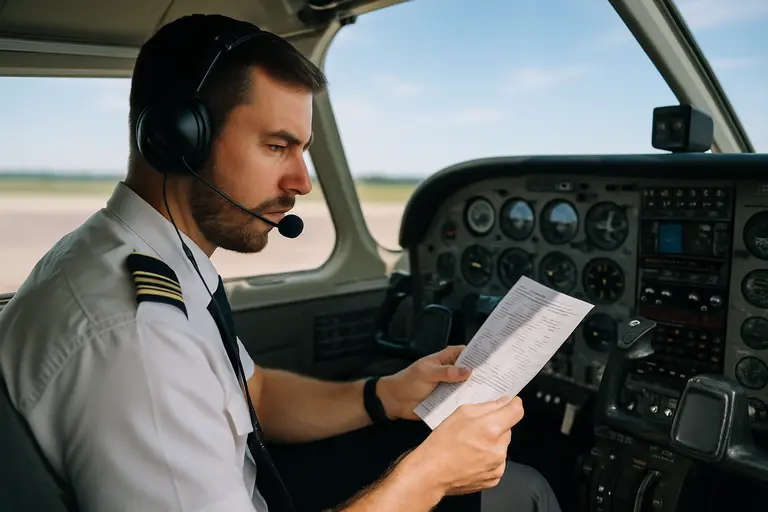
Professional pilots often talk about lifestyle through schedules, commuting, reserve days, and sleep. Communication discipline belongs in that same conversation because it shapes daily work habits. A pilot who treats every clearance, readback, and acknowledgment as a safety-critical exchange is building a career skill, not just passing a checkride item. That habit becomes especially valuable when flying into congested airspace, temporary sites, special events, or operations with mixed civilian and military traffic.
For student pilots and early-career aviators, the Marine One event is a strong case for practicing beyond the minimum. Chair-fly abnormal radio events. Ask instructors to simulate unreadable transmissions. During preflight planning, identify likely frequency changes and backup communication paths. If you operate near busy terminal airspace, study how helicopter routes, departure corridors, and tower responsibilities interact. A related training discussion on Marine One communication lessons extends these points for pilots building cockpit habits after the DCA event.
Technology Helps, But Procedures Still Carry The Load
The research notes state that after the incident, the FAA moved relevant radio equipment to the top of the DCA control tower, restoring line-of-sight in tests. That type of infrastructure fix is valuable, but pilots should avoid the false comfort that equipment changes alone solve communication risk. A better antenna can improve coverage, while a clear training protocol ensures crews know what to do if coverage fails again somewhere else.
Modern surveillance tools, including ADS-B capabilities discussed after the January 29, 2025 Potomac River collision, also support traffic awareness. Yet surveillance is not a replacement for positive coordination. In a cockpit, traffic displays, radios, clearances, visual scanning, and crew cross-checking must support one another. Training should treat them as layers, with no single layer assumed to be perfect.
For pilots comparing training resources across aviation sites, the broader network at SiteBob can be a great resource for finding related professional learning material, but the central standard remains the same: verify the instruction against official sources and current operating procedures.
Aviation Communication Training After Marine One
Practical Standards For Syllabi And Recurrent Checks
Training departments can turn the August 4, 2026 incident into specific proficiency items. First, require a communication-risk briefing whenever a departure or landing site changes. Second, test primary and backup frequencies from the actual operating position when feasible. Third, make acknowledgment mandatory for safety-sensitive calls. Fourth, include failed-relay scenarios in recurrent training. Fifth, bring maintenance or radio technicians into post-drill reviews when coverage, antenna placement, or signal path may be part of the issue.
For individual pilots, aviation communication training should become a personal standard rather than a box checked before a rating or recurrent event. The Marine One incident showed that experienced crews can make the required call, agencies can hold planning meetings, and backup plans can still fall short during live operations. The safest response is not blame. It is better rehearsal, clearer trigger points, and a cockpit culture that treats an unacknowledged transmission as an unresolved safety item until proven otherwise.


