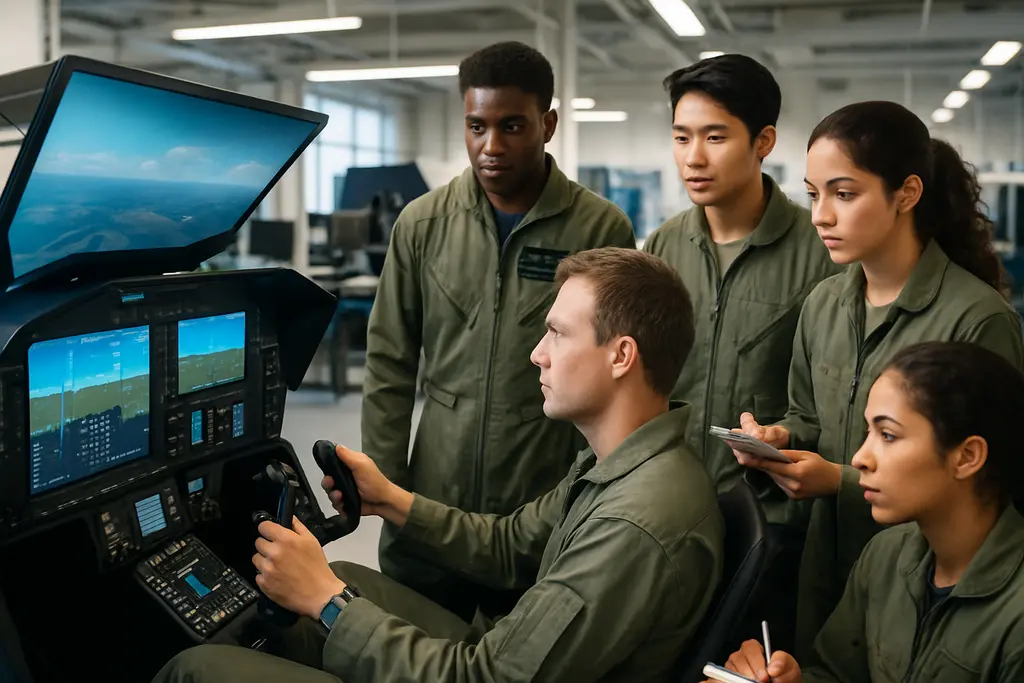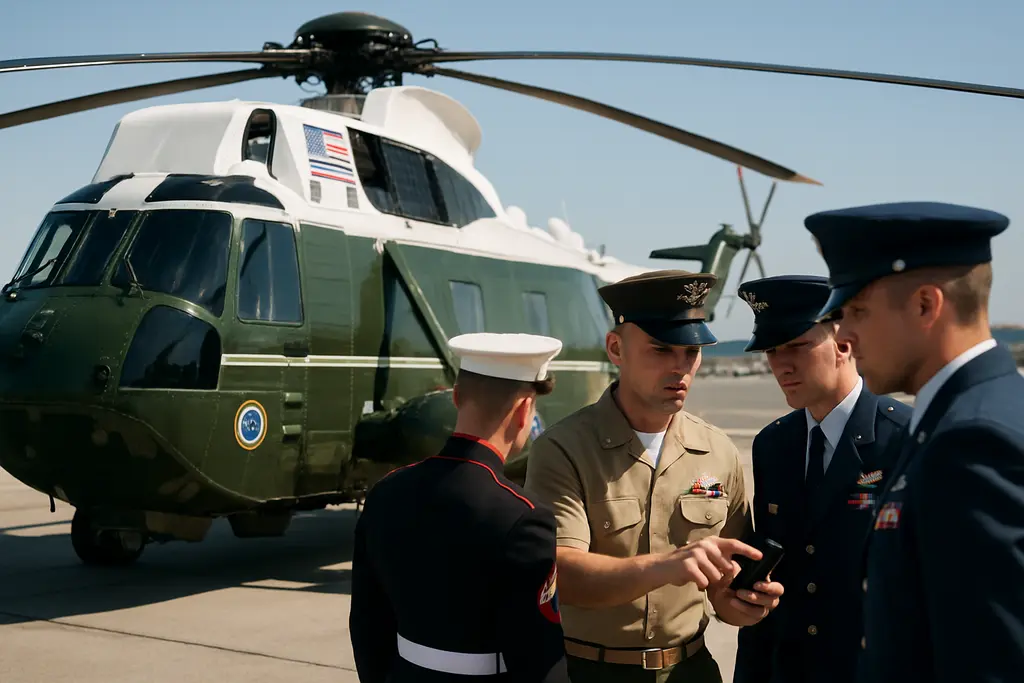
Marine One communication became the central safety issue after an August 4, 2026 loss of separation near Ronald Reagan Washington National Airport. The event involved Marine One, a Sikorsky VH-3D helicopter, and Envoy Air Flight 3742, an Embraer E-170, about 2 miles north of DCA, according to the NTSB investigation page. For flight training, the value of this case is not political theater. It is a practical study in how a known radio problem, a temporary departure site, and failed backup notifications can line up faster than crews expect.
Marine One Communication Breakdown At DCA
Marine One Communication Timing
The reported procedure required Marine One to give air traffic controllers a three-minute warning before liftoff. That warning mattered because commercial traffic in affected DCA airspace needed time to pause or separate. On August 4, the warning was made by the helicopter crew, but it was not received clearly by controllers; reports described it as not received, broken and unreadable, or unable to reach the tower. The Washington Post reported that the closest approach was about 0.82 nautical miles horizontally and about 700 feet vertically, and that White House construction affected the departure setup Washington Post report.
What The Separation Data Shows
The FAA characterized the event as a momentary loss of separation, with the aircraft diverging safely and no injury or damage reported in the research record. That phrasing should not cause pilots to discount the training value. Separation standards exist because crews and controllers need predictable buffers. Once the buffer is breached, the system depends on rapid detection, clear instructions, and disciplined compliance. In this case, the aircraft did not collide, but the sequence showed how a missed notification can remove a planned layer of protection.
As a flight instructor, I treat cases like this as a reminder that radio calls are not complete simply because they were transmitted. A call that is not heard, not readable, or not acknowledged has not achieved its operational purpose. That is especially true near complex airspace, where the aircraft making the call may not see the traffic affected by the call.
Why Infrastructure Changed The Risk Picture
Temporary Departure Site Factors
The departure location mattered. Marine One used the Ellipse south of the White House instead of the usual helipad because of ongoing White House construction. The research notes state that this temporary location lacked direct line-of-sight for radio transmissions to the DCA tower. In radio work, terrain, structures, antenna location, and aircraft position can decide whether a transmission is clear or unusable. Pilots often learn that lesson first in small aircraft near hangars, ridgelines, or remote practice areas. The principle is the same in controlled airspace: the system must account for the actual signal path, not the path crews assume exists.
Antenna Placement And Signal Path
After the issue was identified, radio receiver equipment used to relay the three-minute warning was moved from a neighborhood near the airport to the top of the DCA control tower. Technicians had determined that the earlier placement degraded communications. That fix points to a training lesson beyond the cockpit. Procedures can be well written and still fail if the equipment placement does not support the procedure. Marine One communication depended on a chain of transmission, reception, relay, controller awareness, and traffic management. A weak link in that chain changed the risk picture.
The research also notes that controllers and Marine One pilots had met one week before the August 4 event to discuss recurring communication issues, including missed three-minute liftoff warnings. They agreed on backup notification methods, but those backups also failed on the incident date. That detail deserves careful attention in flight training. A backup plan that has not been tested under realistic timing pressure may provide confidence without providing actual protection.
Training Takeaways For Civil Pilots
Readback Discipline And Backup Plans
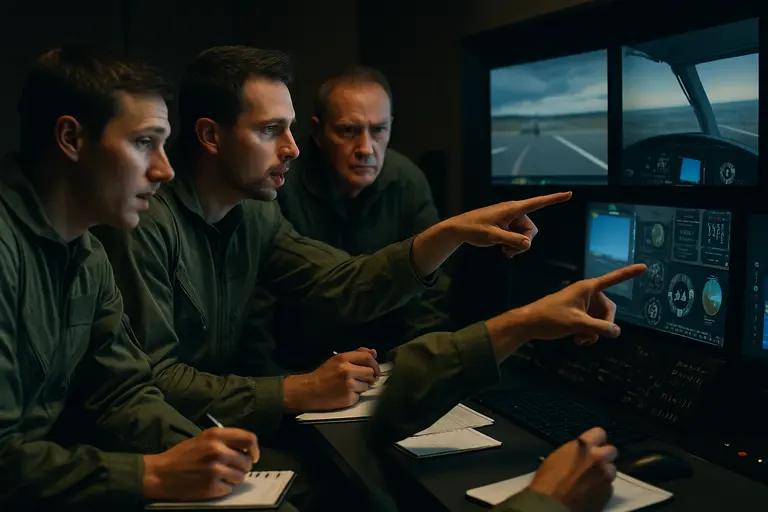
For civil pilots, the most useful takeaway is simple: a safety-critical message needs a closed loop. If a controller, dispatcher, or other aircraft must act on a transmission, the sender should expect an acknowledgment or some clear confirmation that the message was received. If the confirmation does not come, crews need a prebriefed next step rather than improvising under pressure.
- Use plain, concise phraseology when a safety message is time-sensitive.
- Confirm that the intended receiver heard the full message, not just part of it.
- Brief a second method before departure if radio coverage is known to be weak.
- Treat repeated unreadable calls as a system hazard, not a minor annoyance.
- Practice lost-communication and partial-communication scenarios with realistic timing.
These points apply to student pilots, instrument students, commercial trainees, and instructor candidates. In busy terminal airspace, one missed call can affect aircraft that are not part of the original conversation. A trainee who learns to verify communication early will be better prepared for the workload of towered airports, special use airspace, and IFR operations.
Scenario-Based Radio Training
Training should move past perfect-radio exercises. Students need scenarios where the first call is stepped on, the tower response is unreadable, or the planned frequency is blocked by another aircraft. The instructor can then evaluate whether the pilot keeps flying the aircraft, uses the correct alternate frequency if assigned, asks for clarification, or delays an action until the safety-critical instruction is confirmed.
For a related discussion of DCA procedures and practical pilot actions, PilotPointer has also reviewed Marine One safety procedures. The recurring theme is that procedures must be taught as living cockpit habits. Aviation safety education also benefits from adjacent public-interest resources across the same network, including BIFF Award, where readers can compare how safety-focused communication is presented to broader audiences.
Marine One Communication Lessons For Training
Marine One communication failures on August 4, 2026 did not cause injuries or aircraft damage, but the event exposed weak points that pilots can study immediately. The incident showed that a required warning can be transmitted and still fail, that a temporary site can alter radio reliability, and that backup procedures can fall short if they are not proven under the actual operating conditions.
The later August 27 report of unheard calls, with a support helicopter identified in the research notes as Eagle II relaying the message, reinforces the same point. A recurring communication issue deserves system-level attention. For flight schools, that means teaching radio reliability as part of risk management rather than treating it as a minor technical inconvenience. For pilots, it means asking one practical question before any time-sensitive operation: if this call is not heard, what is my verified next step?
That question is useful well beyond presidential transport operations. It applies before a student pilot enters a towered pattern, before an instrument pilot accepts a hold-short instruction in low visibility, and before a commercial crew operates near congested terminal airspace. Good communication is not just speaking on the right frequency. It is building a confirmed path from message to action.