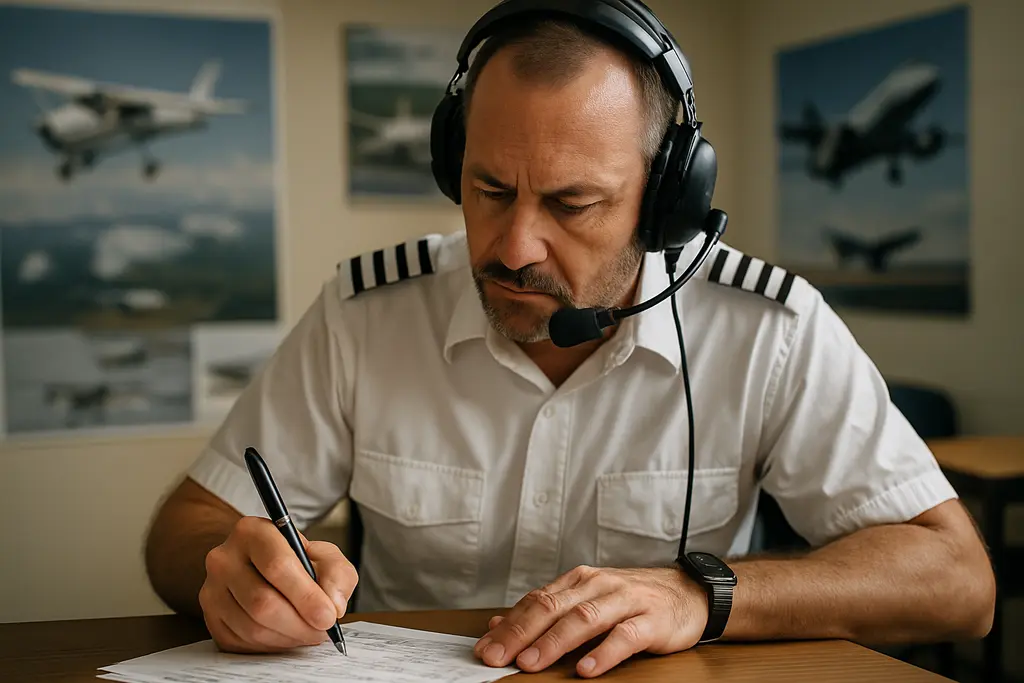
I thought becoming a “professional” pilot was about more hours in the air. Then, I faced the commercial checkride. It felt like a TV show finale—same squad, bigger challenges, with my nerves fully on board.
The FAA practical test makes everything concrete. It’s no longer about showing off. It’s about showing I can plan, make decisions, and fly reliably under pressure.
The CPL checkride splits into two parts. We start with the oral exam, discussing rules, weather, navigation, systems, and how to manage risks. Next, during the flight exam, I show my skills and judgment. I aim to be a professional, not just put on a show.
Most often, a designated examiner oversees the test. They use the Airman Certification Standards as a guide. The focus is on clear skill demonstration, not tricky questions. My top tip for the FAA checkride is to prepare well, know the standards, and pay attention to every detail. Each one counts.
At the end, the examiner verifies the training, observes my actions in-flight, and gives a simple result: pass or fail. This moment really highlights the difference between private and commercial flying—what this guide aims to explain.
Training Differences
Private training is like a relaxed jog: log hours and learn moves without alarming anyone. Then, the commercial track feels like analyzing a complex spreadsheet. Preparing for a commercial checkride isn’t just about studying harder. It’s about training smarter. The FAA wants me to seamlessly think, brief, and fly.
With this training, I’m tackling both the oral and flight parts together. The ACS gives me a clear path to avoid confusion. It’s more than just a test guide; it tells me what excellence looks like and what questions to expect under pressure.
Advice for FAA checkrides seems easy until you’re in the moment. It’s critical to explain why things are done, not just what to do. This means I practice weather decisions, understanding airspace, and how to plan. Knowing the bare minimum might help pass, but deep knowledge saves me when unexpected problems arise.
I stick to a practice routine that doesn’t depend on last-minute cramming. A mock checkride reveals any weak areas quickly, especially with scenario questions. If I can smoothly handle a diversion in practice, I know I’m prepared.
-
Use materials aligned with federal standards and the ACS.
-
Focus deeply on weather, airspace, laws, and decision-making.
-
Practice maneuvers until they’re second nature, including within full flight scenarios.
-
Do a mock checkride early, then refine with instructor feedback.
In the Redbird FMX simulator, I can practice without spending on fuel or testing patience. It lets me retry scenarios, a luxury real flying doesn’t offer. It’s closest you can get to a do-over in aviation.
Flight schools vary in their approach, but the goal remains the same. At Pelican Flight Training, there’s a strong focus on repetition and clarity. This way, both flying and communication are sharp. The result? Training goes beyond just maneuvers. It builds the discipline I’ll need, even after the examiner is gone.
| Training Focus | Private Pilot Emphasis | Commercial Track Emphasis |
|---|---|---|
| Knowledge standard | Recall key rules and procedures for safe local flights | Explain decisions with regulations, weather logic, and performance math |
| Skill practice | Isolated maneuvers and short routes | Complete profiles with tighter tolerances and better energy control |
| Oral prep style | Answer-based studying with note cards | Scenario-based briefings using the ACS roadmap as the script |
| Error management | Fix mistakes after they happen | Predict errors and brief mitigations before takeoff |
| Rehearsal environment | Mostly airplane time | Airplane time plus Redbird FMX simulator reps for procedures and emergencies |
Costs and Hour Requirements
Earning a commercial license means logging lots of flight hours. It’s more than just flying; it’s about mastering skills and making decisions. As you learn, the cost of flight time adds up.
The cost to take your checkride is a major expense in learning to fly. It includes fees for the examiner, aircraft use, and prep time. These costs ensure you’re ready and can handle the stress of the oral exam.
First, consider the Designated Pilot Examiner (DPE) fee. This fee pays for the examiner’s time during your oral exam and flight test. Since examiners are in high demand, it’s critical to schedule early.
Then, there’s the cost of renting an aircraft. This includes not just the flight time, but also any extra time needed for repositioning. It’s like managing a band on tour, where every hour costs.
Training in a simulator can save money and is highly effective. You can practice emergencies and communications without the cost of flying. This way, your flight time is focused on learning what only an airplane can teach.
Good checkride prep is like insurance for your emotions. Failing isn’t just disappointing; it’s also costly. So, treat FAA tips as essential steps, not just advice. Study hard, practice your moves, and make surprises rare.
| Cost or Requirement | What It Covers | Why It Moves the Budget | Practical Control Lever |
|---|---|---|---|
| DPE fee | Examiner time for oral and flight, scheduling, and administrative work | Regional demand and limited availability can raise pricing and reschedule risk | Book early, confirm aircraft availability, and keep paperwork complete |
| Aircraft rental hourly rate | Flight portion time, warm-up, and possible repositioning | Extra tenths add up fast, especially with weather delays and long briefs | Fly efficiently, arrive prepared, and minimize “let’s try that again” time |
| Simulator training cost | Procedures practice, scenario work, and instrument-like workload without fuel burn | Often cheaper than the airplane, but still a real line item | Use it for emergencies, profiles, and radio discipline to save aircraft time |
| Hour requirements | Building experience toward commercial standards and consistency | More hours usually means more rental, instruction, and maintenance surcharges | Plan cross-countries with purpose and pair training goals with time building |
| Retest risk | Additional instruction, more aircraft time, and another examiner appointment | Turns “almost” into a second bill, plus scheduling delays | Apply FAA checkride tips, do thorough mock orals, and fix weak areas early |
Allowed Privileges: Flying for Hire Explained
Moving from flying for fun to flying for pay marks a big shift. It means you’re stepping into a career in aviation. It’s about flying people or goods for money, or taking command with finances involved. But, this shift introduces a complex world of regulations.
Flying for hire is not all the same. Some jobs are under FAA exceptions like certain tours or aerial photography. Others fall under stricter regulations needing special certificates. For a clear understanding of what you can or can’t do, check out this guide on commercial flying rules.
The big step towards being professional is passing the commercial certificate checkride. It’s divided into an oral exam and a flight test, like other FAA exams. But the expectations are higher. The goal is to prove you’re reliable, not just for fun trips but for serious scheduling too.
During the oral part, they expect me to know all about the flying regulations and safety. When we fly, it gets intense with challenging weather and commands from air traffic control. It’s about showing I can maintain high standards even under pressure.
| What the examiner probes | What “commercial-level” looks like in practice | Why it matters when money is involved |
|---|---|---|
| Regulations and compensation limits | Clear explanations of permitted paid operations, plus when Part 119/135 questions pop up | Prevents accidental “holding out” and other expensive misunderstandings |
| Planning and navigation | Accurate performance numbers, alternate thinking, and realistic fuel decisions | Clients tolerate delays; they don’t tolerate sloppy judgment |
| Weather analysis | Solid go/no-go logic, not just “it looks fine on the app” | Paid flying raises pressure, so your decisions must stay boring and safe |
| Aircraft control and maneuvers | Stable airspeeds, headings, and altitude with fewer corrections and more anticipation | Precision reduces risk and shows professionalism under workload |
| Aeronautical decision-making | Calm prioritization when distractions stack up | Your passengers won’t see the checklist, but they’ll feel the outcome |
This isn’t about trick questions. The FAA’s practical exam verifies your skills and safety. It doesn’t just look at how you feel. It’s about your actual performance, being consistent, and staying in control during busy times in the cockpit.
One important note: some commercial pilot privileges depend on additional certifications and health checks. For instance, without an instrument rating, you can’t carry passengers for hire at night or past certain distances. So, having the certificate is great, but you also need the right qualifications to use it fully.
Salaries and Typical Jobs
The checkride is not just about getting paid. It’s the gatekeeper to your aviation career. It marks the transition from flying for fun to making serious career decisions, like handling dispatch calls and weather changes that affect your schedule.
Examiners look for key skills during a checkride. Can you explain your decisions, plan ahead, and keep things safe and smooth? These skills define professional pilot standards. Things like radio discipline and making timely decisions to prevent problems are crucial.

Getting paid to fly opens many doors in aviation. Your salary can vary based on factors like your schedule, the type of aircraft you fly, and where you’re based. Employers look for pilots who are safe, clear communicators, and consistent in their techniques.
| Typical job | Common schedule reality | What hiring managers listen for | Pay drivers (big levers) |
|---|---|---|---|
| Flight instructor (CFI) | Long days, lots of briefings, weather reshuffles | Clear teaching, calm cockpit presence, sharp risk calls | Student volume, school rates, multi-engine time, local demand |
| Banner towing | Seasonal peaks, heat, and constant pattern work | Energy management, precision, conservative decision-making | Season length, aircraft utilization, coastal markets |
| Aerial survey | Travel-heavy, repetitive routes, odd hours | Staying sharp in monotony, fuel planning, controlled airspace comfort | Project tempo, per diem, instrument skills, aircraft complexity |
| Part 135 charter (as experience grows) | On-call stretches, client-driven timelines | Professional communications, SOP discipline, weather judgment under pressure | Base location, turbine equipment, multi-crew ops, company growth |
Focus on building solid habits rather than memorizing trivia. The best FAA checkride advice? Brief thoroughly, identify risks early, and avoid unstable approaches. This calm, systematic approach is what makes you truly employable.
Salaries and job titles can change, and the industry can be unpredictable. But certain things remain steady: meet professional standards, make clear decisions, fly accurately, and save the drama for Netflix. This is how you start benefiting from your aviation career.
Advancement and Career Paths
The path in aviation training is much like climbing a ladder where every step challenges you more. It requires a smarter mind, steadier hands, and a serious approach to weather checking. The journey’s outline might stay the same, but what’s expected of you sharpens at each level.
Going from private to commercial pilot seems straightforward on paper: Private Pilot, Instrument Rating, Commercial, then instructor ratings for those wanting to gain hours while teaching. In practice, it’s like moving up levels in a video game, with each level’s boss being a tough oral exam. The first checkride tests your basic flying skills and planning. For the commercial checkride, the standards are much higher and more professional.
ACS standards transform from just a document to a real reflection of your skills. They define “good enough” through precise maneuvers, decision-making, and risk management skills. If you miss the standards, the plane won’t care how confident you sounded before takeoff.
Much of your progress is made before the examiner arrives. Feedback from instructors is key as it turns broad habits into actionable improvements. A good instructor connects your skills directly to ACS standards, making each flight a focused improvement session.
Mock checkrides are important because they simulate real pressure without the consequences of failing. I prefer doing them with a different instructor to catch any small habits I’ve overlooked. This practice makes you approach each stage as if it were the real deal—not just another practice run.
As you earn more ratings and fill your logbook, more career doors open. Moving toward airline or corporate flying means meeting ATP standards quickly. For an insight into how pilots typically advance, this advancement guide clearly outlines common paths without sugarcoating the hard work involved.
| Step in private to commercial progression | What the checkride really tests | How to use instructor feedback | Where mock checkride value shows up |
|---|---|---|---|
| Private Pilot (PPL) | Cross-country planning, basic maneuvers, safe decision-making under normal workload | Clean up radio flow, tighten traffic pattern habits, and standardize checklists | Reveal weak spots in navigation and airspace awareness before the DPE does |
| Instrument Rating (IR) | Procedures, scan discipline, holding, approaches, and staying ahead of the airplane in IMC logic | Turn “chasing needles” into stable corrections and better briefings tied to ACS standards | Practice real-world workload: re-routes, missed approaches, and partial-panel surprises |
| Commercial Pilot (CPL) | Precision, professionalism, and consistent tolerances with higher expectations across maneuvers | Sharpen power management and callouts; make every maneuver repeatable, not lucky | Stress-test standards under scrutiny, especially on steep spirals, chandelles, and emergency scenarios |
| Instructor Ratings (CFI/CFII) | Teaching, demonstrating, correcting, and explaining the “why,” not just flying the “what” | Refine lesson flow and fix your own gaps by teaching them out loud | Simulate endorsements, teaching scenarios, and oral-depth questions that love to spiral |
The way jobs vary in aviation, the training rhythm is constant: study, fly, debrief, then repeat. Success in aviation is for those who view every flight as a chance to learn, not just to show off. And remember, relying on luck might work in TV shows, but in real life, ACS standards must be met precisely.
Should You Go Commercial?
Thinking about going commercial seems simple, like just upgrading an app to its “pro” version. But it’s far from that. Deciding to go for a commercial pilot checkride tests what flying really means to you: is it a hobby, a part of who you are, or a way to make money?
Deciding to fly for pay means meeting high professional standards. It’s not just about performing tasks. I need to explain and defend my actions, and make decisions with confidence. And I must do all this under the watchful eye of an examiner.

The real challenge starts even before taking off: on the ground. Success in a CPL checkride hinges on how well you handle the commercial pilot oral exam. This “talk” is essentially making decisions out loud.
I must know regulations, systems, weather, navigation, and risk management inside out. Admitting when I don’t know something is crucial. Then, I should calmly describe how I would find the answer without panicking.
On the day of the checkride, what really matters is my judgment. High Tide Aviation suggests stress management tactics that are straightforward: get enough sleep, eat properly, stay hydrated, arrive early, and remember to breathe. Next, I review the PAVE checklist and seriously consider if I’m truly ready to fly.
FAA checkride advice becomes more than just slogans here. If something doesn’t feel right, it’s okay to reschedule. A good examiner will respect that decision. It shows the kind of sound judgment that employers value.
| Decision point | What I’m really asking | What “ready” looks like | What “not yet” looks like |
|---|---|---|---|
| Motivation | Do I want income, or just more freedom? | I can name the job paths I want and the hours I’ll need | I’m chasing the rating because it sounds impressive |
| Ground knowledge | Can I explain decisions under pressure? | I can teach the basics of regs, weather, and performance clearly | I rely on rote answers and hope the examiner “doesn’t go there” |
| Risk management | Will I act like PIC when it’s inconvenient? | I use the PAVE checklist and can justify go/no-go calls | I let schedule or pride make the call for me |
| Checkride strategy | Am I preparing for the whole event? | I practice both maneuvers and the commercial pilot oral flow | I over-train steep spirals and ignore the oral |
| Professional habits | Can I manage my body like a tool? | I plan sleep, meals, and arrival time like part of training | I show up tired, underfed, and surprised by stress |
Comparing Time Commitments
Time is where the “I’ll just cram this weekend” dream fails. A true commercial checkride study plan isn’t just for fun. It’s a schedule that demands respect. I’ve realized that success comes from balancing oral prep and flight proficiency.
Studying for the oral isn’t just passive learning. Practicing oral exams aloud helps me spot my own weaknesses in understanding. This makes exam discussions much easier to handle.
In the plane, doing things over and over is key. commercial checkride tasks focus on precision under pressure. For steep turns, I must keep altitude tight and be accurate when leveling off. Slow flight and stalls show the importance of gentle control and proper trim.
Unexpected “real world” challenges also arise. This includes communicating at different airfields, making approaches stable, and mastering go-arounds. Mastering these may seem dull, but it’s what being a pro is all about.
Simulator time offers efficient learning without breaking the bank. Using a Redbird FMX lets me practice emergencies and procedures safely. It’s good preparation for real-life issues, where making early mistakes is part of the learning process.
| Prep Focus | What I Spend Time On | What It Builds | Common Time Trap |
|---|---|---|---|
| Oral readiness | oral exam practice out loud on weather, systems, regs, and aerodynamics | Clear explanations under pressure | Silent studying that feels “productive” but doesn’t train speech |
| Maneuver precision | commercial checkride maneuvers: steep turns (±100 ft, rollout within 10°), slow flight, stalls, ground reference | Control feel, scan discipline, and tolerance awareness | Doing one good set and calling it “done” |
| Scenario flow | Departures, arrivals, go-arounds, workload management, and radio rhythm | Decision-making that stays calm and quick | Skipping awkward phases like go-arounds and short-field setups |
| Simulation efficiency | Redbird FMX rehearsal for emergencies, abnormal checklists, and full profiles | Reps without weather delays or aircraft downtime | Using the sim like a video game instead of a debrief tool |
Planning a mock checkride schedule keeps my study time focused. I allocate days for oral scenarios, maneuvers, and full-profile flying. Then, I take a short break before repeating. The goal is not just to stay busy, but to be wisely prepared.
Conclusion
At the end of the day, it’s not just about grades, money, or knowing your stuff. The commercial pilot test marks the big step from learning to being officially recognized. It’s all about showing you can fly safely, with all the right documents in hand. The secret? Just keep it simple: stay calm, come ready, and act like a pro.
The oral part of the test checks what you know, not just what you’ve flown. Think of it as a professional briefing—be straightforward, structured, and speak clearly. You should know the Pilot’s Handbook of Aeronautical Knowledge, the Plane’s Operating Handbook, and the relevant FAA regulations inside out. The person testing you is not there to trip you up; they’re making sure you meet the standards.
When it’s time for the flying part, “good enough” won’t cut it anymore. You need to nail the basics. For example, you should execute steep turns closely within set limits because small mistakes can lead to big problems. The best advice for passing? Do practice tests, follow a checklist, and be prepared to talk through any decisions. In aviation, being “boring” means keeping everyone safe.
Last thoughts? The test isn’t about being perfect. It’s about being dependable when it matters, sticking to the guidelines every time. Show up well-rested, brief like you mean it, stick to the flight parameters, and be ready to stand by your choices. Follow through with this approach, and you’ll find that confidence is something you earn through solid preparation.