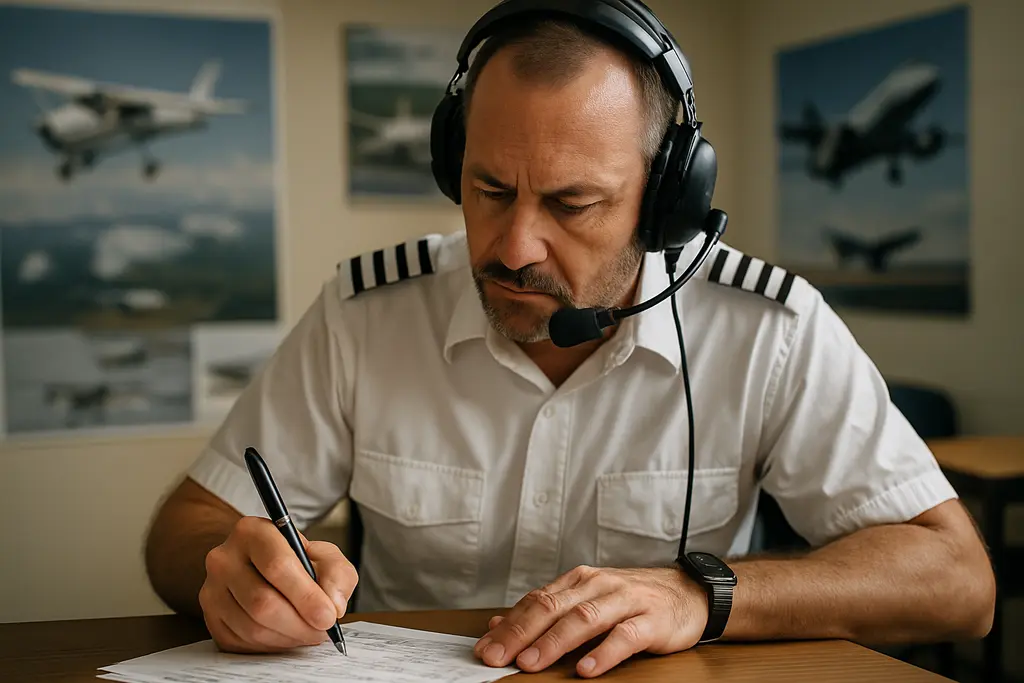
Many commercial pilots face a big decision: get a Certified Flight Instructor certificate or find another way to build flight hours. The choice is tough. Airlines don’t need you to have a CFI. The idea of not teaching can seem appealing, especially if teaching scares you or you’re tempted by easier ways to fill your logbook.
Here’s an interesting point, though. Flight schools are really struggling to find CFIs, especially now with a pilot shortage. This struggle was highlighted in a summary mentioned by the Washington Post. It’s like the industry is saying, “Teaching’s not so bad, right?” Suddenly, the perks of instructing don’t just seem nice, they sound logical.
Being a CFI is unique. You face early starts, quick changes, and explaining basics as if you’re on live TV without a script. Your first few teaching moments feel like making up music on the spot, while being judged. But soon, practice improves your skills dramatically, mercilessly fixing your flaws.
One big, yet unglamorous, perk of teaching flight is it makes you a better pilot. Research shows teaching something helps you remember it better than just going over notes. Basically, explaining things to a student in the air is a fast-track way to learn.
Then there’s the timeline. Most pilots become CFIs with around 300 to 500 hours, even though the official minimum is 250. The goal is usually to hit 1,500 hours. That’s the magic number for more advanced flying jobs in the U.S. Getting there faster means you move up the career ladder quicker.
So, endorsements are crucial. They’re not just a signature. They’re a commitment to FAA standards, training quality, and your own reputation. Taking your CFI role seriously means keeping your records clean and your integrity high.
What is a CFI Endorsement?
A CFI endorsement is the moment I change from coach to notary. It’s my signature proving you’re ready for certain flight milestones. In simple terms: my sign-off means you can officially do what you’ve been trained for.
This process isn’t just about being a nice mentor. It’s a concrete pledge, proven with a logbook, that training standards were met. It mixes public trust with necessary paperwork.
Earning a CFI endorsement takes intentional preparation. It involves learning to teach, designing lesson plans, and explaining technical stuff simply. The hard work helps you truly grasp the material.
Being an instructor also has its wins. You get to see students’ progress, correct mistakes early, and prevent bad habits. This hands-on guidance improves both the student’s and the instructor’s skills.
| What the endorsement does | What I’m actually saying | Why it matters in training |
|---|---|---|
| Documents required instruction for a specific FAA privilege or requirement | I provided the training and verified the standard | Creates a clear training trail and keeps readiness tied to evidence, not vibes |
| Authorizes a defined next step, like solo privileges or a practical test attempt | You’re prepared for this step right now | Turns helping student pilots into a measurable checkpoint, not a pep talk |
| Places instructor accountability on the record | I’ll put my certificate’s reputation on this call | Explains why instructor perks come with real risk management and discipline |
Types of Endorsements (Solo, Knowledge, Practical)
There are three big types of endorsements: solo flying, knowledge tests, and practical tests. Flying isn’t just about being able to pilot a plane. It’s also about understanding the rules, the risks, and the reasons behind them.
Ever wonder why we bother teaching flight? It’s because teaching means checking the basics every day. I find myself teaching the same core lessons over and over and over. And guess what? Repetition makes pilots much better than just flying a lot of hours.

Solo endorsements mean the student can finally fly alone, but only after they’ve practiced specific things. Every day, a CFI teaches, shows, observes, discusses, and repeats. When a student flies right every time, giving them a solo endorsement is about paperwork, not worry.
Knowledge test endorsements show that the student didn’t just coast through ground school. When it’s time for the test (or a retake), this endorsement is the CFI’s way of saying, “They’ve learned what they need.” The FAA provides clear guidelines for this in their endorsement guidance.
Practical test endorsements are a big deal. They mean a CFI believes the student is ready for the checkride. It’s like a legal stamp of approval. It also shows why being a flight instructor is valuable. You’re not just teaching; you’re learning how to judge performance under stress.
Instructing is often about logging hours because of simple math. At a busy school, you fly often, and students reach new milestones often. This leads to a constant cycle of training, assessing, endorsing, and improving.
| Schedule | Weekly Flight Time | Hours Built Toward 1,500 | Estimated Time to Add 1,200 Hours | What It Means for Endorsements |
|---|---|---|---|---|
| 4 hours/day × 5 days/week | 20 hours/week | +1,200 hours | About 1 year and 2 months | Steady solo, knowledge, and practical endorsements as students cycle through stages |
| 6 hours/day × 6 days/week | 36 hours/week | +1,200 hours | About 8 months | Fast-paced endorsements, frequent stage checks, and tighter standards to stay consistent |
This busy schedule is real. Thrust Flight’s instructors often reach 1,500 hours in under a year, then move to airlines. In such a busy setting, endorsements are constant. And if you’re still wondering why to teach flight, know that being a flight instructor sharpens your skills every single day.
Record-Keeping and Legal Pitfalls
Record-keeping mixes the excitement of flying with the tough reality of paperwork. If something isn’t written down, it’s like it never happened. Your student’s rights and your own protection hinge on endorsements and training logs.
The logbook and endorsement must reflect the training you gave. A missing date, wrong number, or omitted detail can cause big problems. What seemed like a small oversight can turn into a major issue.
Instructing full-time increases responsibilities quickly. Flying 4-6 hours, 5-6 days a week adds up to many flight hours. Every lesson adds to your load, increasing the risk of error.
Being an instructor also means dealing with human factors. You work with students of various backgrounds and abilities. This requires more patience, clear explanations, and detailed notes to keep training on track.
| Where problems start | How it shows up later | Low-drama habit that helps |
|---|---|---|
| Vague endorsement wording | Mismatch between student privileges and what was trained | Use precise endorsement language and verify the category/class and conditions |
| Missing dates, totals, or instructor certificate details | Records look incomplete during a checkride review or audit | Make a same-day entry routine and double-check identifiers before you sign |
| Training gaps hidden by busy schedules | “We covered that” turns into “prove it” under scrutiny | Write short lesson notes tied to maneuvers, standards, and outcomes |
| Weather and reschedules breaking continuity | Inconsistent progression that’s hard to explain later | Document what changed, what was reviewed, and what’s next |
The CFI life isn’t just about flying. It includes weather issues, students not showing up, and repetition of basics. The challenge is to keep records organized amidst the chaos, feeling like an unseen episode of a DMV comedy.
If you aim for the benefits of instructing without legal issues, view paperwork as part of the teaching. A steady approach to documentation defends your training and helps manage your schedule.
Providing Meaningful Endorsements
A meaningful endorsement is more than a quick approval. It’s a careful evaluation of what I’ve observed, corrected, and ultimately accepted. If that sounds serious, it should. The FAA sees signatures as proof, and no one wants to pay for the same mistake twice.
When I teach student pilots, I don’t just count their landings. I look for patterns like hurried checklists, messy radio skills, or too much optimism. The more students I work with, the quicker I notice the common mistakes pilots make.

Being a flight instructor also has its benefits. It teaches me how to help without hurting someone’s confidence. Some students prefer direct feedback. Others need gentle guidance. Either way, an endorsement must meet standards, not just feel right.
Science supports this, even if it sounds like advice from a podcast. Teaching helps with memory, better than just reading again. When I explain complex topics like stalls to student pilots, I also sharpen my own understanding. This improves my skills in the cockpit too.
Good flight schools have a strong culture. Instructors share insights, review flights, and practice emergencies with the head instructor. This cycle of teaching, reviewing, and analyzing makes endorsements based on facts, not just being nice.
| What I observe before endorsing | What I do with the data | What it prevents |
|---|---|---|
| Checklist flow stays consistent under time pressure | Scenario-based runs with distractions, then a debrief on missed items | Task saturation that leads to skipped steps and busted procedures |
| Radio calls match the situation and stay concise | Practice with readbacks, then tighten phraseology until it’s clean | Misunderstandings, runway incursions, and “say again” spirals |
| Landings show repeatable control inputs, not lucky saves | Track trends across winds, weights, and runways; fix one variable at a time | Overconfidence based on a good day instead of stable skill |
| Risk management shows up in decisions, not speeches | Use briefings to surface alternate plans and personal minimums | Press-on-itis and weak go/no-go judgment |
An endorsement should be meaningful and based on clear evidence and straightforward coaching. When student pilots reach this level, signing off is easy. The real challenge is all the work leading up to that moment.
Updates in FAA Endorsement Policy
The FAA endorsement policy is always changing, like a software update that pops up just when you think you’re up to date. Aviation admits its rules must adapt when reality shifts. So, your endorsements need to keep up with these changes.
instructor perks are definitely a plus, but dealing with paperwork is a downside. Ever wondered why teach flight? Here’s a reason: staying on top of policy changes lets you help students progress without unnecessary repeat lessons.
Recently, the FAA started seeing instructor currency differently. They now view it more like “recent experience” than something that expires suddenly. A new rule means many flight instructor certificates won’t expire if they’re issued after a certain date. But, older ones still have the 24-month limit. To learn more, check the final rule update. Read it carefully, twice, like you would with a weather brief.
These changes impact how endorsements work. For example, the FAA now values experience from FAA-approved programs as “15 activities” instead of “15 hours” of flight time. This is a big deal. It affects how instructors plan and record training, and how they explain it to students who think in terms of flight time.
| Policy shift | What it changes in day-to-day endorsements | Why it matters to a working CFI |
|---|---|---|
| Certificate expiration removed for many new CFI certificates | Less calendar-driven renewal panic; more focus on staying compliant through recent experience | Fewer last-minute scrambles means steadier scheduling, cleaner records, and more predictable instructor perks |
| Renewal framed as recent experience every 24 calendar months | Endorsements and training plans need consistency over time, not just a “checkride season” push | Schools scaling up want instructors who can explain requirements clearly; that’s part of why teach flight for career leverage |
| Pilot proficiency program uses 15 activities (not 15 hours) | Logbooks and endorsements must match the activity-based standard | Reduces rework when students transfer or change examiners, which protects paychecks in a $20–$30/hour world |
| Reinstatement can be done via an approved FIRC if lapse is no more than three calendar months | A tighter, clearer path back to privileges if you briefly fall behind | Lower downtime risk supports employability when flight schools are hiring aggressively and expecting reliability |
Being knowledgeable about policy is also important for getting hired. Schools that care about safety want instructors who consistently apply endorsement rules. Some offer contracts that reward stability, making staying up-to-date seem less like extra work and more like securing your job.
Looking at the bigger picture shows why this matters so much. Many flight instructors earn $20–$30 an hour, making around $30,000–$60,000 a year. When thinking about why teach flight, remember that avoiding paperwork mistakes is key. It not only does the right thing but also protects your time and helps students keep moving forward.
Instructor Liability & Staying Current
Becoming a flight instructor means taking on a big responsibility. Every endorsement you give is serious. Think of it as a professional agreement, not just a friendly gesture. If you’re a Certified Flight Instructor (CFI), your signature matters a lot. It can become a problem if you’re not up-to-date with your knowledge and skills. Being an instructor is a quick way to gain experience. However, you must also remember it comes with its own set of risks.
Being a full-time instructor is fast-paced. You might log between 20 to 36 hours of flight time every week. This means you could reach 1,500 flying hours in just one to two years. Speeding through your training improves your skills quickly. But it also increases your risks at the same pace. Staying sharp and informed is mandatory. This is crucial for preventing ordinary flights from becoming major problems in your career.
Never underestimate the importance of communication. It’s essential, especially with student pilots who are not native English speakers. You need to repeat, explain, and confirm they understand you. This is not about making things too easy for them. It’s a way of managing risk. Doing so helps protect both the student pilots and your own flying certificate. This becomes very important if the Federal Aviation Administration (FAA) starts asking tough questions.
Training to be an instructor is a serious step in your career. Take the example of CAE’s instructor pilots. Their training is crucial for military readiness. They view teaching as a vital mission, not just a temporary job. The financial benefits of becoming a CFI also support this serious approach. Initially, the pay might seem low. But as you log more hours, the pay improves significantly. For example, after gaining enough experience, pilots can earn a lot. According to Salary.com, helicopter pilots earn about $96,000 a year. Airline pilots can earn over $130,000 annually. So, for CFIs who keep their skills sharp and avoid liabilities, teaching can be very rewarding.