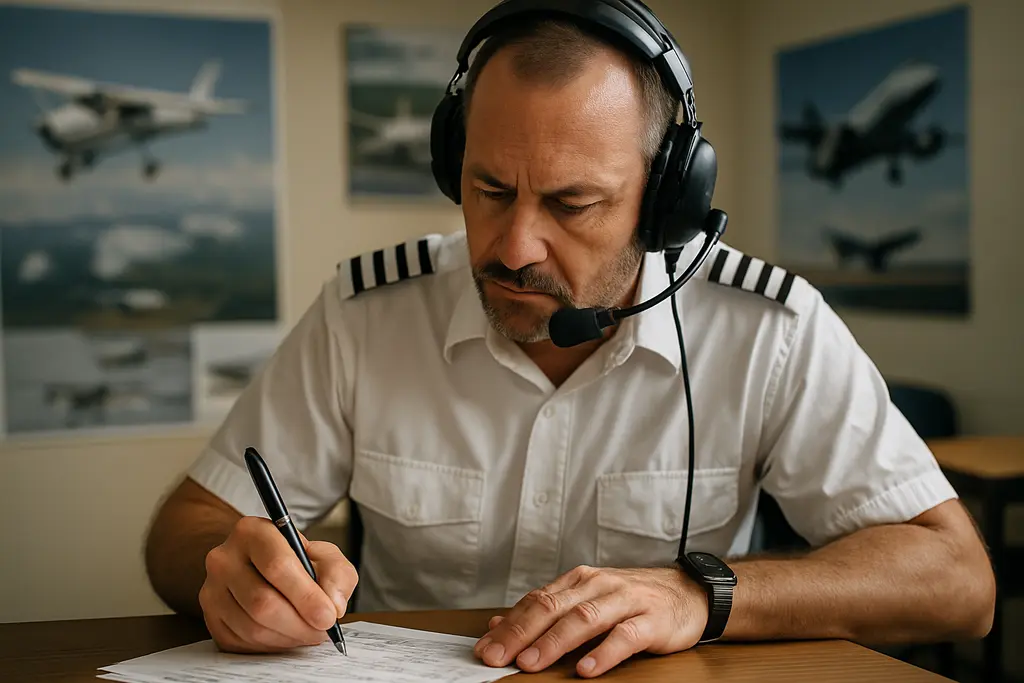
The private pilot checkride is one of the biggest milestones in flight training because it’s the first time you’ll be evaluated as a pilot who can plan, brief, fly, and make safe decisions without your instructor stepping in. Most checkride “failures” are not about raw stick-and-rudder talent. They usually come from gaps in preparation: weak standards knowledge, messy paperwork, inconsistent maneuvers, or a lack of clear aeronautical decision-making.
This guide gives you a realistic, step-by-step plan to prepare for your private pilot checkride with a focus on consistency, safety, and professionalism. You’ll also get a simple timeline you can follow, plus a few mindset tools to help you show up calm and ready.
Understand What The Examiner Is Really Evaluating
A designated pilot examiner (DPE) is not looking for perfection. They’re looking for a pilot who can operate safely, manage workload, and make sound decisions while staying within standards.
At a high level, your checkride performance must demonstrate three things:
You can plan and brief a flight like a pilot in command.
That means solid weather interpretation, realistic go/no-go thinking, and a complete understanding of your route, airspace, and alternates.
You can fly the airplane within standards consistently.
Not once. Consistently—especially when something changes, like a new altitude assignment, an unexpected wind shift, or a simulated system issue.
You can explain what you’re doing and why you’re doing it.
The checkride is a test of judgment as much as technique. If you can verbalize your thinking, you reduce ambiguity and build examiner confidence.
Build Your Checkride Packet Before You Touch Another Maneuver
A surprising number of checkrides get delayed or derailed because of preventable paperwork problems. Before you try to “fly your way” into being ready, make sure you can walk into the room with an organized packet and answer basic eligibility questions quickly.
Here’s a clean checklist of what most applicants should have ready:
| Item | Why It Matters | Quick Self-Check |
|---|---|---|
| Government photo ID | Identity verification | Not expired, matches name |
| Pilot certificate(s) | Eligibility | Student cert in hand |
| Medical certificate | Eligibility | Correct class, valid dates |
| Knowledge test report | Required for practical test | Still within validity window |
| Logbook endorsements | Proof of training and readiness | Instructor signed and dated |
| IACRA / 8710-1 | Application | Submitted and accurate |
If any of these are messy, fix them first. A smooth start sets the tone for the entire day.
Use A Two-Week Plan Instead Of “More Practice”
Most students don’t need “more hours.” They need a better structure. The final two weeks should be about tightening outcomes, not adding new techniques.
A practical approach is to split your prep into four tracks:
| Track | Goal | What “Ready” Looks Like |
|---|---|---|
| Oral Prep | Explain concepts clearly | You can teach it back simply |
| Maneuvers | Consistency within standards | Repeatable results across days |
| Procedures | Predictable flows and checklists | Few missed items under stress |
| Decision-Making | Safe, conservative judgment | You verbalize risk and alternatives |
When you train like this, you stop guessing. You can identify exactly what’s weak and fix it directly.
Train The Oral Exam Like A Conversation, Not A Quiz
The oral portion often feels harder than the flight because it exposes uncertainty quickly. The easiest way to improve is to stop studying in “random order” and start studying in the order a pilot actually uses information.
A good oral flow is:
Start with the airplane.
Airworthiness, inspections, limitations, required equipment, and basic systems. Be able to explain what makes the aircraft legal and safe to fly today.
Move to the flight.
Weather products, performance, cross-country planning, airspace, and NOTAMs. Practice giving a concise briefing like you would to a passenger or instructor.
Finish with the pilot.
Risk management, ADM, personal minimums, and real-world decisions. This is where you win credibility—by showing conservative, thoughtful judgment.
A strong rule here: if you can’t explain it in plain language, you don’t own it yet.
Fly Like You’re Already The Pilot In Command
In the final week, stop flying “as a student.” Start flying with the mindset of a pilot responsible for outcomes.
That means:
- You brief every takeoff and every landing
- You state your altitudes, headings, and next actions out loud
- You identify threats early (wind, runway length, traffic, workload)
- You correct promptly instead of hoping it “comes back”
This is the same confidence shift students feel right before their first solo—when training stops being “following instructions” and becomes actively managing the flight. If you need a refresher on that mental transition, revisit these first solo flight tips.
Prepare For Mistakes Without Spiraling
You will make a mistake on the checkride. Everyone does. The difference between a good checkride and a rough one is whether the mistake triggers a spiral.
A clean recovery pattern is:
Acknowledge → Correct → Stabilize → Continue
If you drift off altitude, correct promptly and stabilize. If you botch an entry, go around or reset. A safe decision and a calm correction often builds more confidence than trying to “save” a sloppy setup.
This is where mental resilience matters. Checkride stress is real, and it can narrow your thinking. If you want a practical mindset toolset, this resource on positive mental resilience is a useful complement to flight training.
The Day Before Checklist That Actually Helps
The day before is not the time to cram. Your goal is to show up with a clear head and a simple plan.
Focus on:
Documents and logistics: Confirm your start time, meeting location, aircraft schedule, fuel plan, and maintenance status.
A short standards review: Know your tolerances and common gotchas.
A light flight or chair-flying: Practice flows and callouts, not “maximum effort” maneuvers.
Sleep and hydration: It sounds basic, but it’s performance-critical.
Frequently Asked Questions
How Long Is A Private Pilot Checkride?
Most private pilot checkrides take several hours, usually split between the oral exam and the flight portion. The exact length depends on the examiner, the aircraft, and how efficiently the day runs.
What Do Most People Struggle With?
Many applicants struggle with consistency and explanation. It’s not enough to “do” a maneuver—you need to show good setup, stable execution, and you need to explain your decision-making clearly.
What If I Mess Up A Maneuver?
A single mistake doesn’t automatically end a checkride. What matters is your response. Safe corrections, stabilized flying, and good judgment are often viewed positively.
Is It Better To Delay If I Don’t Feel Ready?
Yes. A checkride is not a slot you “use up.” If your preparation isn’t consistent, delaying is often the smartest pilot-in-command decision you can make.
Final Takeaway
Passing the private pilot checkride is less about cramming facts and more about proving you can operate with structure: organized documents, clear explanations, stable maneuvers, and calm decision-making when things change. If you train the last two weeks with a plan—oral, maneuvers, procedures, and judgment—you’ll walk in looking like what the examiner wants to see: a safe, prepared pilot.