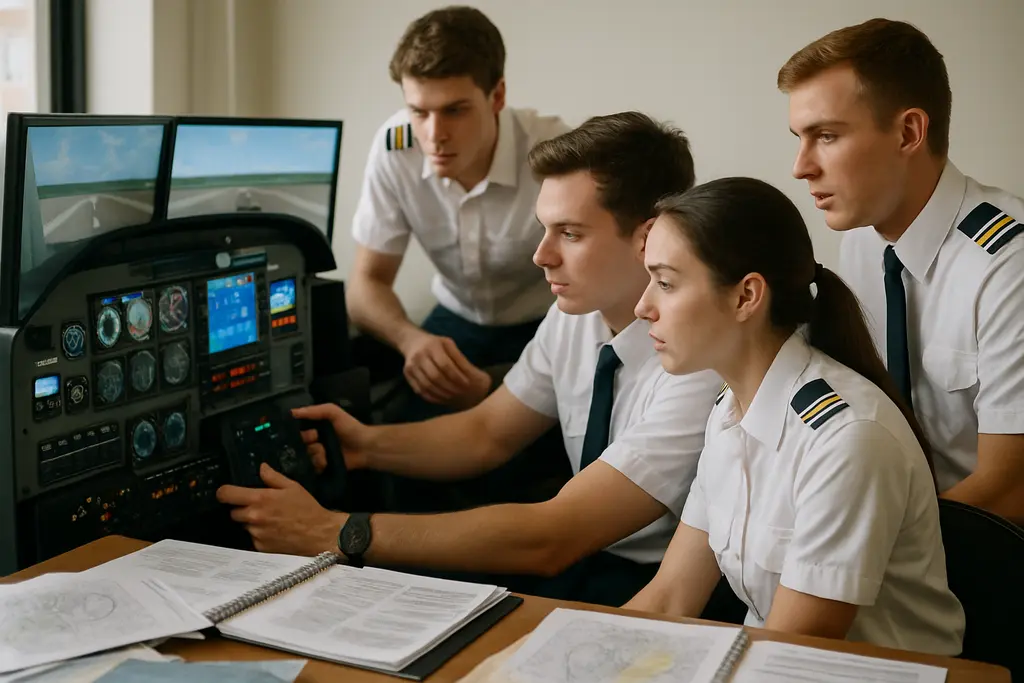
Confirmed FAA action: AAM pilot training now sits at the intersection of two FAA shifts: centralized oversight for certificated UAS and Advanced Air Mobility activity, and a dedicated powered-lift rule for pilot certification and operations. Since June 1, 2026, FAA Notice 8900.777 has reorganized oversight for certificated UAS and AAM operators and manufacturers under the Safety Assurance Branch, AFS-760, according to the research record. For flight schools, training centers, operators, and maintenance organizations, the practical issue is not only a new office name. It is a stronger need to align syllabi, instructor records, simulator use, aircraft-specific procedures, and FAA coordination before a new training program reaches students.
AAM pilot training Under Revised FAA Oversight
What Changed On June 1, 2026
Confirmed: FAA Notice 8900.777 became effective on June 1, 2026, and shifted oversight of certificated UAS and AAM operators and manufacturers under AFS-760. The research notes identify the affected operational and support areas as Parts 91, 135, 137, 141, 142, and 145. That group reaches beyond the flight deck. It includes schools that train pilots, training centers that use approved curricula, operators building certificate pathways, and maintenance providers supporting the aircraft used in those programs.
Why AFS-760 Centralization Matters
Training analysis: Centralized certificate-management functions can change how a school prepares for FAA review. A local training provider may still work with familiar FAA personnel, but the oversight model described in the research places UAS and AAM certificate activity under one safety-assurance structure. For AAM pilot training, that points toward more consistent expectations across curriculum approval, instructor qualification files, aircraft conformity, and simulator documentation. The likely pressure point is proof. Schools will need records that show not only that a lesson was taught, but that the lesson matches the approved program and the aircraft or simulator configuration used.
Powered-Lift Rules And Certificate Planning
AAM pilot training Requirements For Powered-Lift
Confirmed FAA action: On October 22, 2024, the FAA issued the powered-lift final rule, creating a 10-year temporary framework for pilot certification, training, and operations for powered-lift aircraft, a category that combines features associated with airplanes and helicopters FAA powered-lift rule. That timing matters for protocol design because many training organizations are still building programs while aircraft certification and operational plans continue to mature.
Confirmed regulatory detail: Under the powered-lift SFAR, a pilot applying for a commercial pilot certificate with a powered-lift rating must log at least 250 hours of flight time, including 100 hours as pilot in command, with at least 50 of those PIC hours in a powered-lift aircraft. The Federal Register text states that these requirements cannot be reduced under current regulations Federal Register rule text. For AAM pilot training providers, that requirement places aircraft access, scheduling, instructor availability, and insurance planning directly into the training pipeline.
Training Aircraft And Instructor Pathways
Confirmed: The research notes state that SFAR Part 194 allows alternate frameworks for initial powered-lift training and instructor certification when aircraft have a single functioning flight control and single pilot station configuration. That is significant because not every early powered-lift aircraft is expected to mirror the layout of a conventional dual-control trainer. Advisory Circular AC 194-2, issued on November 21, 2024, gave guidance to flight schools, instructors, and evaluation centers under Parts 61, 141, and 142 for building powered-lift programs scaled to the type and complexity of the aircraft. The main training takeaway is clear: a one-size program is unlikely to be the right model for aircraft that differ sharply in control design, automation, performance, and pilot interface.
Protocol Changes For Flight Schools
Part 141 And Part 142 Program Controls
Training analysis: Schools operating under structured approval systems should expect program control to matter as much as lesson content. Part 141 schools may need to show how powered-lift or UAS-related lessons fit course objectives, stage checks, instructor standardization, aircraft limitations, and recordkeeping. Part 142 training centers may face similar questions around simulator qualification, scenario design, evaluator training, and recurrent checks. For a related view of certification planning across flight schools, see this Pilot Pointer analysis of the FAA agenda for flight training programs.
Scenario-Based Instruction And Records
Training analysis: The powered-lift rule described in the research uses more performance-based operational concepts in some areas, which can move future lessons toward scenario-based instruction, simulation, and competency assessments. That does not erase flight-hour requirements where the rule sets them. It does mean AAM pilot training protocols should connect hours, skill standards, and operational judgment in a traceable way.
- Confirmed need: Training files should connect each student’s lesson record to the approved syllabus, aircraft type, instructor qualification, and evaluation method.
- Training analysis: Schools should standardize instructor briefings for powered-lift transition topics, including aircraft configuration differences and pilot interface changes.
- Training analysis: Simulator or training-device use should be documented with the same care as aircraft lessons, especially when devices support scenario-based checks.
- Training analysis: Chief instructors and training managers should review how UAS, AAM, maintenance, and operations teams exchange safety data.
Operational Readiness And Workforce Timing
Confirmed Timeline Signals
Confirmed: The research notes cite the FAA’s Innovate28 Implementation Plan, released in July 2023, as aiming for initial AAM operations at one or more scaled sites by 2028. The same research also cites an April 2026 GAO report stating that a key part of the U.S. Advanced Air Mobility National Strategy is training a workforce with new skills for new methods of flight and advanced technologies. FAA officials also noted that several original equipment manufacturer schedules for powered-lift certification had slipped, which shifted expectations for when training under the new rules would be widely enacted.
Risk Areas For Training Leaders
Training analysis: The timing issue cuts both ways. If schools wait for aircraft programs to fully mature, they may lose time building instructor depth, documentation habits, and simulator lesson quality. If they move too fast, they may build courses around assumptions that do not match the aircraft, operating certificate, or FAA review process. A practical middle path is to separate stable items from aircraft-specific items. Stable items include recordkeeping standards, instructor qualification tracking, safety reporting, and curriculum control. Aircraft-specific items include systems lessons, normal procedures, emergency scenarios, and type-rating details. That split lets a school prepare without pretending that every aircraft detail is settled.
FAA UAS And AAM Certification Implications
What Future Protocols Should Prioritize
Training analysis: AAM pilot training should prioritize documented competency, instructor standardization, aircraft-specific course design, and early FAA coordination. The revised UAS and AAM oversight structure raises the value of consistency across schools, operators, manufacturers, and maintenance organizations. Powered-lift certification rules add defined pilot-hour thresholds while still allowing training models that can match aircraft design. For readers comparing policy coverage across related aviation and media networks, explore more about these networks through the BIFF Award site, which shares insights from the same broader publishing group.
Reviewed takeaway: The most practical implication is that future training protocols should be built as auditable systems, not loose lesson collections. A school preparing for UAS and AAM activity should be ready to show why each lesson exists, how each instructor is qualified, how each device or aircraft is used, and how each student’s performance supports the certificate or rating sought. That is the standard that will matter as the FAA’s revised oversight model and powered-lift certification framework continue to shape flight training through the 10-year SFAR period.