

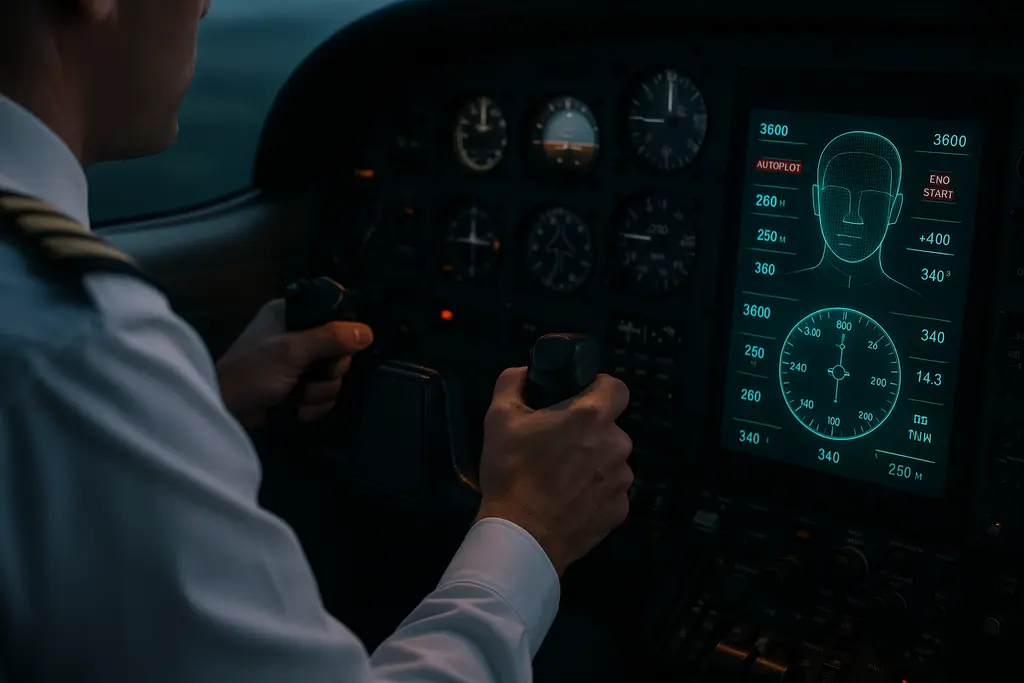
Virtual Co-Pilot Systems are being studied because single-pilot operations place a wide range of monitoring, communication, decision, and recovery duties on one person. The safety question is not whether automation can add helpful prompts. The tougher question is whether a technology-supported cockpit can provide a safety level equal to today’s two-pilot crew model during abnormal events, fatigue, distraction, and sudden medical issues. Based on the research provided, regulators and safety leaders are taking a cautious position: promising tools deserve study, but current technology has not yet settled the risk case for reduced-crew airline operations.
What Virtual Co-Pilot Systems Can And Cannot Do
Where Virtual Co-Pilot Systems Fit In The Cockpit
Confirmed: EASA’s Extended Minimum Crew Operations – Single Pilot Operations project assessed whether single-pilot operations could be feasible in commercial air transport. The key finding in the research provided is that current technology and research remain insufficient to assure safety levels equivalent to two-pilot operations. That finding should shape how instructors, operators, and training managers talk about automation. It is not a substitute captain, a guaranteed emergency manager, or a reason to reduce human proficiency. It is better understood as a possible support layer that may help with workload management, monitoring discipline, and structured decision support if the technology is proven, certified, trained, and backed by procedures.
Training analysis: In practical pilot education, the strongest use case begins before line operations. Flight schools and operators can use virtual assistant concepts to teach checklist discipline, automation monitoring, task prioritization, and clear callout habits. That training value does not prove that one pilot can safely replace a two-pilot crew. It does show where the education community can contribute: by testing how pilots respond when automation offers cues, when cues are missing, and when a system gives information that must be verified against aircraft indications and procedure.
Why Two-Pilot Equivalence Is Hard
Confirmed: The research provided notes that the NTSB Chair publicly opposed single-pilot operations in 2024, warning that two pilots remain a vital safety asset. The reasoning is familiar to instructors. A second pilot is not only another set of hands. The other crewmember cross-checks selections, challenges assumptions, manages radios, reads checklists, monitors weather and traffic, and can take control if the flying pilot is incapacitated. Virtual Co-Pilot Systems would need to address those human redundancy functions without creating new risks from distraction, misunderstanding, latency, poor alert timing, or overtrust.
Market-analysis: Manufacturers and regulators are likely to treat this as a step-by-step certification problem rather than a simple equipment upgrade. The system would have to support normal, abnormal, and emergency workflows across aircraft types and operational settings. For training providers, the useful position is conservative: teach students to treat automation as an aid that requires active supervision, not as a crewmember with judgment.
Single-Pilot Workload And Safety Evidence
High-Workload Operations Are The Stress Test
Confirmed: The FAA has highlighted the pressure found in single-pilot helicopter air ambulance operations, where crews often face fast operational tempo, weather decisions, patient urgency, and rapid risk assessment during demanding missions. The FAA discussion of high-stake flight decisions is directly relevant because it shows the kind of environment any reduced-crew concept must handle. Instructors should read that lesson carefully: workload is not measured only by how many switches a pilot touches. It includes time pressure, uncertainty, task switching, fatigue, and the mental load of deciding whether to continue, divert, delay, or land.
Training analysis: A virtual assistant that works well in calm cruise may still be weak during a weather escape, radio congestion, a system failure, or a runway change near the terminal area. Training programs should therefore test pilot behavior under stacked workload, not only in isolated tasks. Scenario design matters. A student may pass a checklist item in a simulator yet still lose the broader picture when alerts, ATC instructions, and aircraft management compete for attention.
Incapacitation Is A Different Risk Category
Confirmed: A reported Lufthansa Airbus A321 event from February 2024 illustrates why the incapacitation question receives so much attention. According to the report, the aircraft flew for up to 10 minutes without a pilot at the controls after the co-pilot lost consciousness while the captain was out of the cockpit; the incident was later described by The Washington Post. The event should not be used for alarmist claims, but it is a useful training case because it separates automation support from human availability.
Training analysis: Autopilots can hold an aircraft on a selected path when properly configured, but an incapacitation event raises separate questions: who notices, who communicates, who changes the plan, who confirms aircraft state, and who handles an abnormal return? Virtual Co-Pilot Systems may support detection or alerting concepts in future designs, but training organizations should avoid presenting that as a solved problem unless certification evidence supports it.
Training Demands For Virtual Co-Pilot Systems

Scenario Practice Must Lead The Technology
Training analysis: The training need is larger than equipment familiarization. Pilots need practice deciding when to accept a prompt, when to reject it, and when to slow the operation down. That is why scenario-based instruction remains central. A lesson can begin with normal automation use, then introduce weather deterioration, a missed radio call, a checklist interruption, or an ambiguous alert. The instructor can then evaluate whether the pilot maintains aircraft control, communicates clearly, uses checklists correctly, and manages workload without blindly following the system.
For related training philosophy, real-world pilot safety training shows why realistic practice is more valuable than task completion alone. Virtual training tools can strengthen that model if they are used to support instructor judgment rather than replace it. Video review can also help students see where attention shifted during a scenario; educators building lesson libraries may find related production ideas through Internet Video Mag resources in the same network.
Display Design And Manual Flying Still Matter
Confirmed: The research provided notes FAA work on head-worn displays as possible alternatives to head-up displays during critical phases of flight, with workload and performance as key concerns. That research direction makes sense because information placement affects scan, attention, and reaction time. Yet any display solution must be judged by what it does to pilot behavior. If it improves awareness without clutter, it can help. If it pulls attention away from aircraft control or encourages passive monitoring, it creates a training problem.
Confirmed: The research also notes FAA concern about automation overreliance and the need for pilots to remain proficient in manual flying. This is one of the clearest lessons for flight schools. Automation skill and hand-flying skill are not competing subjects. They support each other when taught correctly. A pilot who understands aircraft energy, trim, pitch-power relationships, and failure modes is better prepared to supervise automation and recover when automation does not behave as expected.
Training analysis: Competency-based training is a strong fit for this subject because it evaluates behavior, judgment, communication, and risk management rather than treating training as a checklist of maneuvers. A future syllabus involving Virtual Co-Pilot Systems should include automation management, manual reversion, fatigue recognition, abnormal communication, and decision review after every scenario.
Virtual Co-Pilot Systems For Single-Pilot Readiness
Market-analysis: The most realistic near-term value is not a sudden move to reduced airline crews. It is the gradual use of research, simulation, display testing, and safety assessment to learn where assistance tools reduce workload and where they introduce risk. EASA’s project finding, as provided in the research, points to a high bar: equivalent safety must be demonstrated, not assumed. Operators, instructors, and regulators should ask practical questions before any training program treats a virtual assistant as operationally mature.
- Redundancy: What human function is being supported, and what happens if the system is unavailable or wrong?
- Workload: Does the tool reduce task saturation during abnormal events, or does it add another stream to manage?
- Training: Can pilots show correct use, rejection, and manual recovery under realistic time pressure?
- Fatigue: Does the operational model account for alertness limits in single-operator settings?
- Certification evidence: Has the system been assessed against a safety target comparable to two-pilot operations?
Reviewed opinion: For flight training, the safest message is clear. Virtual Co-Pilot Systems may become valuable cockpit support, but they should be introduced with conservative procedures, instructor oversight, and evidence-based validation. A pilot education program that treats the technology as an aid, not a replacement for a trained crewmember, will prepare students for the real safety debate: how to preserve redundancy, judgment, and aircraft control while testing new tools under disciplined conditions.


