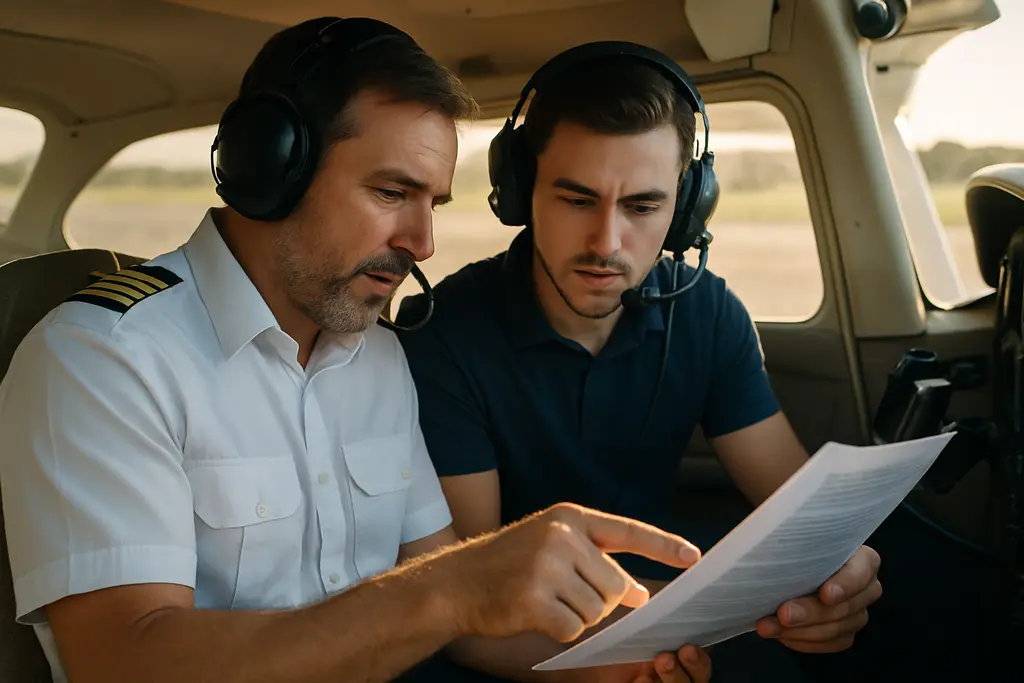
Emergency Response Regulations are gaining fresh attention across flight training because regulators and safety investigators have focused on how pilots practice rare, high-stress events before they happen in the aircraft. Confirmed: on May 13, 2026, the National Transportation Safety Board urged the FAA and airlines to add realistic, scenario-based smoke-in-cockpit simulation to recurrent training after a Dec. 20, 2023 Southwest Airlines Flight 554 event in which smoke rapidly filled the cockpit and affected instrument visibility and checklist execution, according to the NTSB safety recommendations. For student pilots, instructors, and Part 141 school leaders, the signal is clear: emergency training is moving toward stress-tested decision-making rather than verbal review alone.
Why Emergency Response Regulations Matter Now
Emergency Response Regulations And Scenario Design
Confirmed: the NTSB said the FAA receives near-daily reports of in-flight emergencies involving cockpit smoke, while existing rules do not require immersive smoke-event simulations. Training analysis: that gap matters because smoke in the cockpit is not only a systems problem. It affects visibility, breathing, communication, checklist flow, aircraft control, and crew coordination at the same time.
Traditional emergency lessons often separate each task: identify the abnormal indication, recite memory items, reference the checklist, communicate with air traffic control, and prepare for a landing. A realistic scenario compresses those tasks into one workload. That format asks a pilot to prioritize aircraft control while managing limited sensory input and time pressure. Emergency Response Regulations, as they are discussed in the 2026 safety context, point toward training that tests the pilot’s ability to keep order under competing demands.
For an aspiring pilot, the practical effect is not that every lesson becomes dramatic. Good scenario training should be structured, briefed, measurable, and debriefed. An instructor can simulate degraded visibility verbally in a training device, introduce an electrical or ventilation abnormality, or require a student to choose between airports based on weather and aircraft status. The training value comes from the decision chain, not from theatrics.
What Smoke Events Teach Beyond Checklists
Confirmed: the Southwest Flight 554 event cited by the NTSB involved cockpit smoke that impaired visibility and emergency checklist execution. Training analysis: that type of event shows why a pilot needs more than technical recall. A pilot must manage startle, divide duties, communicate clearly, and verify aircraft performance while the cockpit environment worsens.
Flight schools can apply the lesson without waiting for new national training-hour requirements. In primary training, smoke-related scenarios can reinforce immediate control transfer language, checklist discipline, diversion planning, and clear radio calls. In instrument training, the same scenario can test partial-panel interpretation, workload distribution, and missed-approach judgment. In commercial training, it can examine command authority and risk management under passenger-carrying pressure.
Part 141 Modernization And Training Capacity
FAA Review Of Approved School Rules
Confirmed: the FAA has been reviewing modernization of 14 CFR Part 141 pilot school regulations, with public meetings held between March 2025 and March 2026 and the stakeholder proposal comment period closed on May 11, 2026, as shown on the FAA Part 141 public engagement page. This matters because Part 141 schools operate under approved curricula, stage checks, and FAA oversight. Any future change to emergency-response expectations would need to fit that structured training model.
Training analysis: Part 141 modernization creates an opening to align emergency lessons with how students actually progress. Instead of adding isolated emergency lectures late in a course, schools can place scenarios at points where the student has enough skill to make decisions. A private pilot student might face a simplified abnormal situation after learning diversions. An instrument student might handle smoke indications while maintaining clearance limits. A commercial student might manage a passenger briefing, weather choice, and aircraft systems issue in one evaluated scenario.
The available research record does not yet confirm a nationwide increase in required emergency-response flight hours, new FAA pass-rate effects, or a standard smoke-simulation device requirement for all schools. That uncertainty matters for budgeting. Students should not assume that every school will immediately add expensive simulator sessions. They should ask how a school already teaches abnormal and emergency scenarios, how instructors grade decisions, and whether debriefs connect the scenario to FAA airman certification standards.
Capacity Pressure For Schools And Examiners
Reviewed: stakeholder material in the research record reported that many flight training organizations and designated pilot examiners were already busy or over capacity. Training analysis: that pressure affects how quickly deeper emergency practice can be added. A school may support scenario-based training in principle while still facing limits in instructor availability, device scheduling, aircraft dispatch, and stage-check timing.
A practical training plan should treat Emergency Response Regulations as a curriculum design issue, not only a compliance issue. If a school adds emergency scenarios without instructor standardization, students may receive inconsistent expectations. If a school adds long simulator blocks without clear objectives, costs may rise without a matching safety benefit. The stronger approach is to define the scenario, identify the decision points, brief the risk controls, run the exercise, and conduct a focused debrief.
| Training Area | Likely Impact | Student Question To Ask |
|---|---|---|
| Smoke Or Fumes Scenario | More emphasis on visibility, workload, checklist use, and diversion choice | How do you simulate cockpit smoke decision-making? |
| Part 141 Curriculum | Potential updates to where emergency scenarios fit in approved courses | Which stage checks include abnormal operations? |
| Instructor Standardization | Greater need for consistent grading and debriefing | Do instructors use the same scenario evaluation criteria? |
Practical Steps For Student Pilots
How To Evaluate A School’s Emergency Training
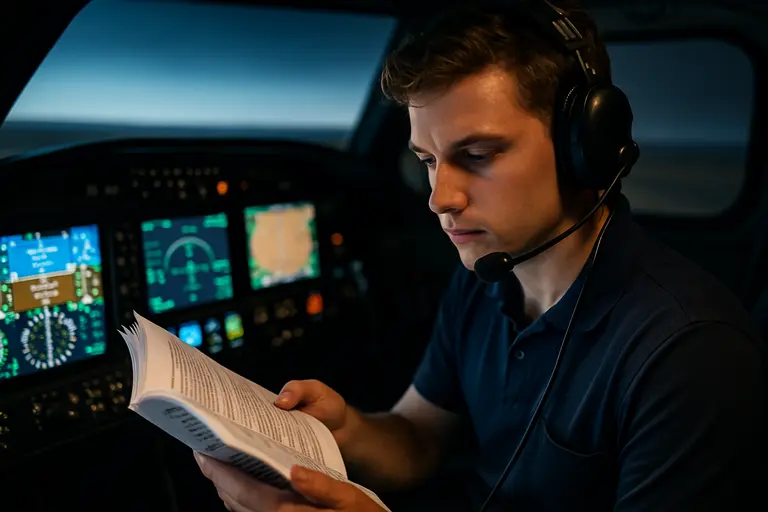
Training analysis: students should compare schools by asking specific questions rather than accepting broad safety claims. A strong answer describes actual emergency scenarios, the aircraft or simulator used, the point in the syllabus where the lesson occurs, and the debrief method. A weak answer stays at the level of “we cover emergencies” without explaining how a student is evaluated under pressure.
- Ask whether smoke, electrical, automation, weather, or communications failures are practiced as full scenarios.
- Ask how instructors separate checklist memory, aircraft control, and aeronautical decision-making during grading.
- Ask whether emergency scenarios are repeated after weak performance or only logged once.
- Ask how simulator or training-device sessions are priced compared with aircraft lessons.
Students can also prepare by using chair-flying and briefing habits before each lesson. A short personal brief might cover the nearest suitable airports, terrain, weather margins, abnormal indications expected for the lesson, and who will fly the aircraft if workload spikes. That habit builds the mental structure needed when an instructor introduces a surprise event.
For readers comparing training models, our related discussion of real-world pilot safety training connects scenario practice with readiness for operational pressure. Schools using video briefings or remote lesson materials may also benefit from broader production and media-planning ideas from Internet Video Magazine, especially when turning emergency procedures into clear pre-lesson study content.
Emergency Response Regulations For Pilot Training
What Pilots Should Watch In Training Policies
Confirmed: as of Aug. 26, 2026, the NTSB recommendation had identified a specific training gap for smoke-in-cockpit events, and the FAA’s Part 141 modernization work had already completed its public meeting and stakeholder proposal period. Training analysis: the next meaningful issue for pilots is not whether emergency practice matters; it is how schools and recurrent programs make that practice realistic, measurable, and affordable.
Emergency Response Regulations will likely be felt first through syllabus language, simulator profiles, instructor standardization, and recurrent training expectations. For student pilots, the best response is direct and practical: choose a school that can explain its emergency scenarios, budget for training that includes decision-making practice, and treat every abnormal lesson as preparation for a real workload problem. Emergency Response Regulations should push training toward calmer, more repeatable habits when visibility, time, and certainty are limited.