Texas A&M-RELLIS marked a notable aviation training milestone on August 20, 2026, when its Remote Pilot Program recognized its first graduating class. As a flight training professional, I see this less as a ceremonial checkpoint and more as evidence that unmanned aircraft systems instruction is moving toward a more structured, standards-based model. The first cohort was small by design and scale: Toheeb Agboola, Hart Bassana, and Geoff Hamilton completed the Professional Remote Operator Program after a 12-week format that began online and ended with in-person flight and classroom training from August 18-20, 2026, according to A&M System News.
Confirmed: the program joined academic infrastructure, UAS operational training, and third-party safety credentials in one pathway. Training analysis: that combination matters because many new drone operators can pass a knowledge test but still lack supervised practice in crew coordination, risk controls, and repeatable operating procedures. For flight schools, public agencies, and companies evaluating UAS programs, the RELLIS model offers a useful case study in how remote pilot education can be designed around proficiency rather than test preparation alone.
Why This Remote Pilot Program Matters
Small Cohort, Clear Training Signal
The first graduating class included three students, which limits any broad claims about completion rates, employment outcomes, or long-term program demand. That said, a small first cohort can be valuable in aviation training because it gives instructors a clearer view of lesson sequencing, student workload, and practical evaluation. In manned flight training, new programs often need several cycles before administrators understand where students struggle. The same principle applies to unmanned aircraft training, especially where classroom preparation must connect to hands-on operating discipline.
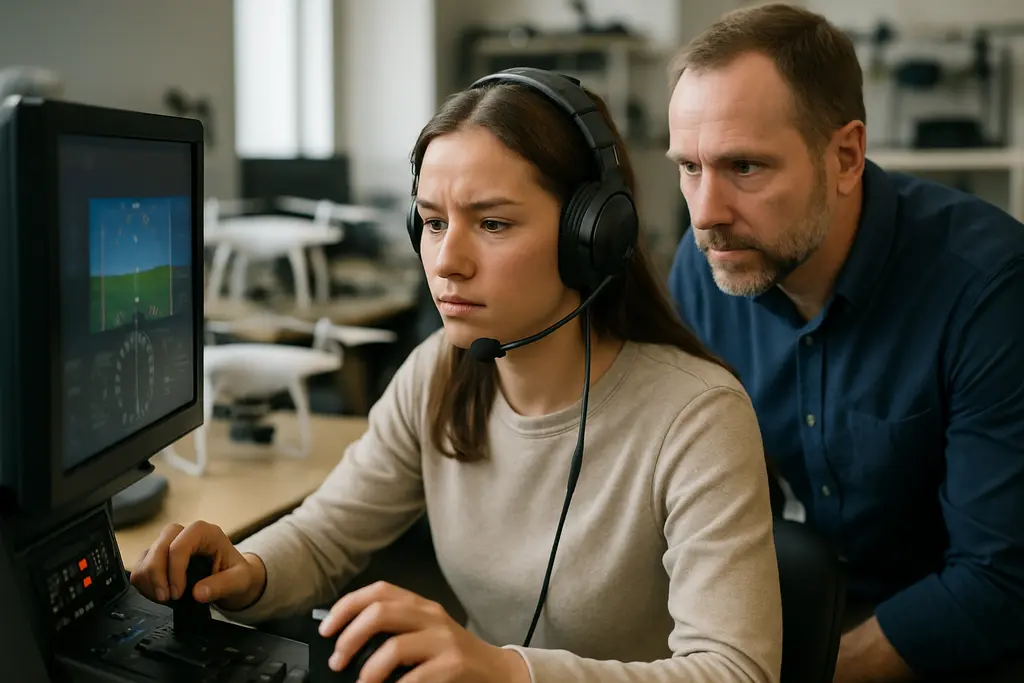
The Remote Pilot Program combined online instruction with an on-site training block, rather than relying on one delivery method. That matters because remote pilots need both knowledge recall and field judgment. Online study can support regulation, airspace, weather, and mission planning content. In-person training is better suited for aircraft handling, preflight habits, crew briefing, communication, and instructor observation. A remote pilot who has only studied for a written exam may know the rules but still need practice applying those rules under time pressure.
From Test Passing To Operational Readiness
The first graduates were eligible for several credentials after completion: the FAA Remote Pilot Certificate under Part 107, USI Visual Line-Of-Sight Operations Ground Certification at Safety Level 3, USI Visual Line-Of-Sight Flight Certification at Safety Level 4, and a Texas A&M-RELLIS Certificate of Completion. Confirmed: those credentials show the program was not presented as a single-exam prep course. Training analysis: the stronger signal is that classroom learning and flight performance were both part of the educational outcome.
For students entering UAS work, this distinction is practical. A Part 107 certificate is a key FAA requirement for many commercial small UAS operations, but employers and public agencies often need evidence that a pilot can operate safely in a defined mission environment. A certificate of completion and safety-level credentials do not replace sound supervision, recurrent practice, or site-specific procedures. They do, however, give hiring managers and training officers more detail than a knowledge certificate alone.
How The Training Model Was Built
Partnership Between RELLIS And USI
The program grew from a partnership announced on April 8, 2026, between Texas A&M-RELLIS and the Unmanned Safety Institute, with the stated aim of expanding drone and unmanned aircraft systems training across Texas, as described by Texas A&M-RELLIS. Confirmed: the first recognized class followed roughly four months after that announcement. Market analysis: that is a short ramp-up period for a credentialed training offering, which suggests the partnership likely depended on existing USI curriculum structure and RELLIS facilities rather than building every component from the ground up after April.
From an instructional standpoint, this type of partnership can help solve a common UAS training problem. Academic institutions may have facilities, administrative support, and regional workforce connections. Specialized safety organizations may bring standardized curriculum and assessment methods. A program becomes stronger when those roles are clearly separated: the campus supports delivery, while the aviation training partner helps define performance standards.
Online Study Followed By In-Person Application
The 12-week sequence is significant because it gives students time to absorb technical material before arriving for hands-on evaluation. Many adult learners need that spacing. Aviation knowledge is retained better when students are asked to apply it after study, not simply memorize it for a single test sitting. For UAS operators, topics such as airspace, weather effects, emergency planning, and visual line-of-sight responsibilities gain more meaning when they are later tied to a real aircraft, a real operating area, and an instructor’s critique.
From my experience reviewing flight training programs, the most useful question is not whether a course is online or in person. The better question is whether each format is assigned the right task. Knowledge delivery fits online instruction if the course includes accountability and instructor access. Skill evaluation belongs in a setting where instructors can see how students brief, inspect equipment, control the aircraft, manage distractions, and respond to changing conditions.
Credentials And Safety Signals
Remote Pilot Program Credentials
The Remote Pilot Program credential stack deserves close attention because it reflects the way UAS training is maturing. Part 107 addresses FAA regulatory knowledge and certification for remote pilots. The USI ground and flight credentials address safety levels tied to visual line-of-sight operations. The RELLIS certificate documents completion of the institutional program. None of these should be treated as a guarantee of job placement or mastery across all aircraft types. They are best read as structured evidence of training exposure and evaluated performance within the program’s stated scope.
Confirmed: the research available for this article does not report job placements, completion-rate benchmarks beyond the named first graduates, or student background details for the inaugural class. That absence matters. Aviation education claims should be measured against outcomes, and first-cohort announcements usually provide only an early signal. Employers, students, and agency leaders should keep asking for later data: number of graduates, check outcomes, recurrent training options, incident records during training, and how graduates apply the skills in field assignments.
Safety Culture For UAS Work
Safety culture in UAS operations should not be copied blindly from crewed aviation, but it can borrow proven habits. Preflight checklists, weather minimums, lost-link planning, sterile cockpit discipline during critical phases, and clear role assignment all translate well to drone operations. A student who learns those habits early is better prepared for utility inspection, public safety support, agriculture, mapping, construction documentation, and other commercial tasks where pressure to “get the shot” or complete the mission can compete with sound decision-making.
For readers building training programs, I recommend comparing any UAS curriculum with broader principles of real-world readiness. The aircraft may be smaller, but the training challenge is familiar: students need enough structure to avoid improvising under stress and enough practice to recognize when a mission should be delayed, modified, or stopped.
Capacity, Timing, And Access
What The September 2026 Cohort Indicates
The research notes state that the next cohort was scheduled to begin on September 8, 2026, with an enrollment deadline of September 1, 2026. Since today is September 2, 2026, that deadline had already passed at the time of this analysis, and the start date remained a scheduled future date rather than a completed event. Confirmed: the first class was recognized before that September cohort date. Training analysis: this spacing points to a repeatable course cycle, but it is too early to judge annual capacity or applicant demand from the public information available.
The research notes also list a 12-week Maintenance Technician Fast Track Program for small unmanned aircraft systems, focused on Group 1 aircraft under 20 pounds and intended for entry- to mid-level roles. That companion track is worth watching because workforce demand in UAS is not limited to operators. Maintenance, inspection, battery handling, configuration control, and troubleshooting all affect safety. A region that trains only pilots may still struggle if it lacks technicians who understand the equipment and the operating environment.
Texas Training Context
The RELLIS campus has a historical aviation connection as the former Bryan Army Air Field, later Bryan Air Force Base, where military aviators trained during World War II and the Korean War. Confirmed: the current program links that training heritage with unmanned aviation education. Training analysis: the comparison should be used carefully. A remote pilot course is not the same as military pilot training, and the missions, aircraft, and regulatory setting differ sharply. The useful parallel is institutional: aviation training sites tend to remain valuable when they adapt facilities, instructor expertise, and safety practices to new aircraft categories.
Readers who follow education and workforce coverage across our publishing network may also recognize adjacent storytelling from our partner at TrueRealTV, though aviation training choices should rest on official program details, regulator requirements, and verified safety credentials. For UAS students, the practical question is direct: does the course build judgment, or does it only prepare you to answer questions? The RELLIS-USI first class gives the industry an early example of a program aiming for the former.
What The Remote Pilot Program Means For Texas UAS Training
The first graduates from Texas A&M-RELLIS do not, by themselves, prove statewide training success. Three students are a starting point, not a trend line. The stronger takeaway is that the Remote Pilot Program placed regulated certification, safety-level recognition, classroom instruction, and hands-on flight training into one pathway. That is the direction UAS education needs if it wants to serve public agencies, infrastructure operators, emergency teams, and commercial users with consistent standards.
For prospective students, the best next step is due diligence. Ask how much instructor-supervised flight time is included, what aircraft are used, how skills are evaluated, whether failed tasks can be remediated, and what recurrent training exists after graduation. Ask whether the program teaches mission planning, crew roles, emergency procedures, weather judgment, and documentation habits. A strong UAS course should make students more disciplined, not merely more credentialed.
For training providers, the lesson is equally clear. The market does not need more vague promises about drones. It needs clear syllabi, defined competencies, qualified instructors, realistic scenarios, and honest reporting of outcomes. The first Texas A&M-RELLIS graduates represent an early, source-supported marker in that shift. If later cohorts publish stronger outcome data, the program will be easier to evaluate against the same standard used across aviation training: not how impressive the course sounds, but how consistently graduates perform safely after instruction.